
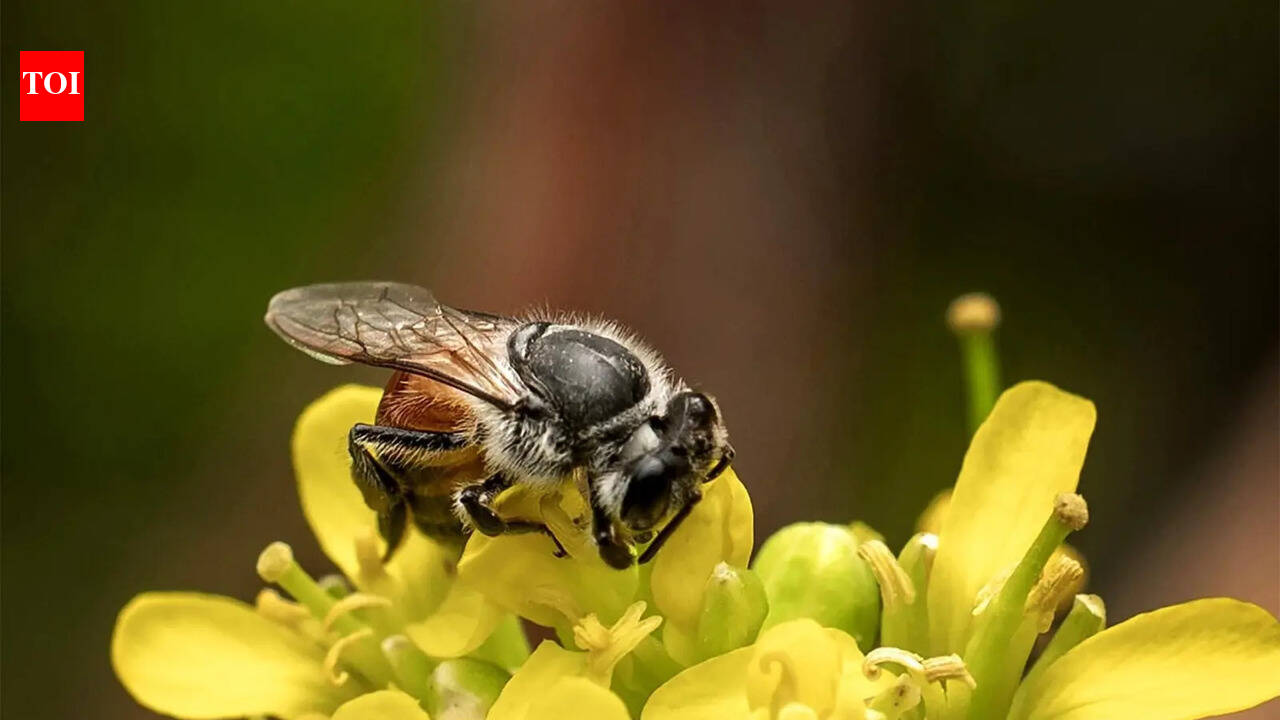
Mumbai: Beekeepers, researchers, nonprofits and govt officials convened in Ahmedabad on Tuesday for a Western India Multi-Stakeholder Dialogue that spotlighted the vital role of bees in advancing sustainable agriculture, strengthening food and income security and building climate resilience.Organised by the nonprofit Under The Mango Tree Society (UTMT Society), in collaboration with the Australian Consulate General, Mumbai, the dialogue set out to distil perspectives, research and ground observations into recommendations that would help shape govt policies and civil society and CSR support. Sujana Krishnamoorthy, executive director of UTMT Society, says they plan to work more closely with govt at both central and state levels and with other stakeholders “to integrate beekeeping with indigenous bees into natural farming and as a climate resilience strategy.”Smallholder farmers from Gujarat and Maharashtra described how beekeeping has provided them with supplementary income through the sale of honey from bee boxes. But the greater economic benefit came from pollination, they said, with improved crop yields that translated into higher earnings.Nilamben Rakeshbhai Chaudhari, sarpanch of Pathakvadi in Gujarat’s Tapi district, said the bees she keeps have increased her yields of ivy gourd, pumpkin, brinjal and chillies by 10% to 20%.Yet, despite their critical role as natural pollinators, bees are rarely prioritised in agricultural planning. Participants emphasised the need to recognise pollination as the “fifth agricultural input” and integrate pollination services into agricultural planning, extension programmes and policy frameworks.Dr Jayesh Pastagia, principal of the College of Agriculture at Navsari Agricultural University, underscored the need for stronger research into the effects of climate change on Indian honeybees and other pollinators, as well as strategies to mitigate those impacts.Bharat Kerasiya, a beekeeper from Kutch who manages 2,000 Apis mellifera bee boxes, said unseasonal rains last year disrupted flowering patterns, affecting the size of his colonies. “Instead of expanding by half, the colonies shrank by 10% to 15% this year,” he said. “We also saw bee-pollinated pomegranate and mustard yields in Kutch decline by 40%.”Participants also called for greater recognition of indigenous honeybee species, such as Apis dorsata, Apis cerana indica and Apis florea, within govt schemes.“We also need to promote native bee flora that can host and feed them,” said Dr Lakshmi Rao, apiculture scientist and former joint director at the Central Bee Research and Training Institute (CBRTI), Pune. “And we need more avenue plantations that can serve as bridges between forests and farms.”Chetan Jha, director of operations at the Foundation for Ecological Services (FES), advocated a systems approach to conservation that places bees within the wider context of farm, forest and water ecosystems. “We need to understand the connections between all three because one sustains the other,” he said, citing the role of bees in pollinating sagwan or teak (Tectona grandis) and timru or tendu (Diospyros melanoxylon), keystone species in central Indian forests that help prevent soil erosion and support groundwater recharge.He also argued for reviving hedgerow biodiversity on farmlands. “Hedge plantations, such as agave, are traditional host plants for bees, but they are increasingly being replaced by wire fencing,” he noted.Poorva Lalbhai, founder of Bees in My Backyard and a proponent of urban beekeeping, spoke about the Nectar Navigators programme with which she is associated. “We are actively creating pollinator-friendly spaces in cities, including bee hotels,” she said, referring to human-made structures that mimic natural nesting habitats. “These spaces support pollinator diversity by giving pollinators places to feed, nest and move through the urban landscape.”