
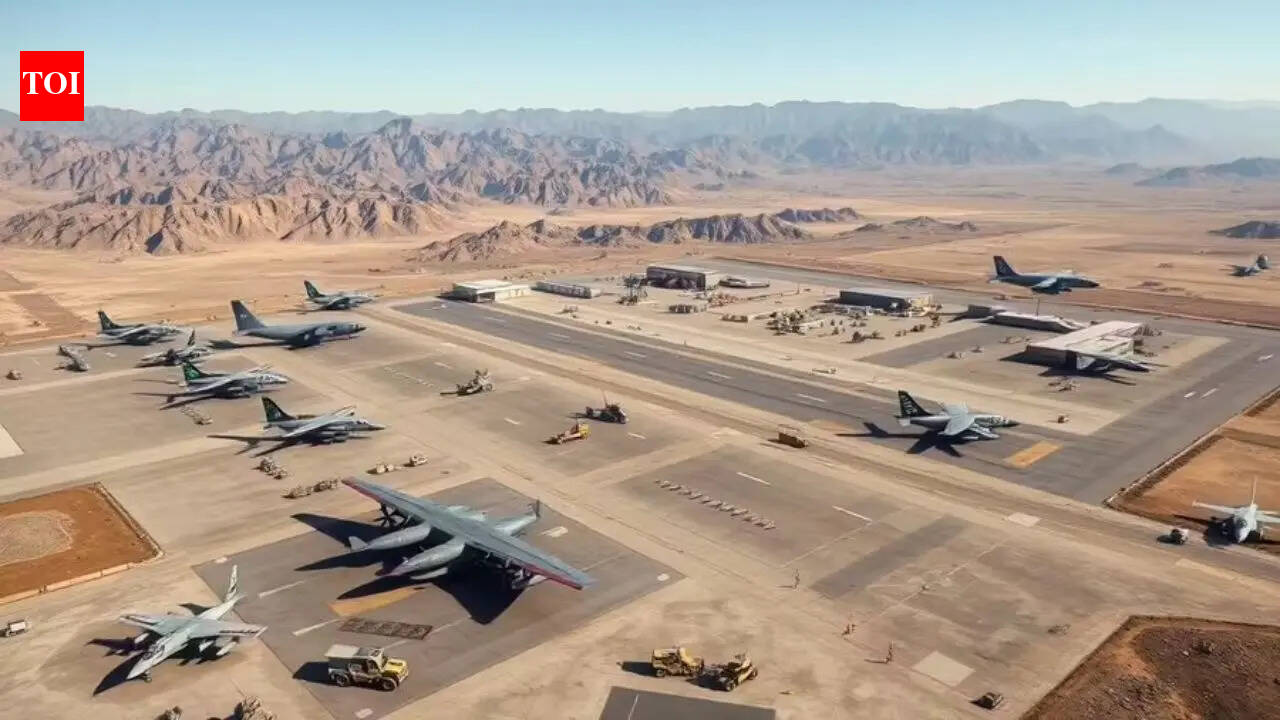
TOI Correspondent from Washington: The report of Pakistan giving sanctuary to Iranian military aircraft revives one of the subcontinent’s great geopolitical ironies: more than five decades after Iran sheltered Pakistani military assets during the 1971 India-Pakistan war – with quiet encouragement from the Nixon administration – Pakistan now appears accused of returning the favour to Tehran as the US weighs military pressure on Iran.Pakistani officials have expectedly denied the allegations, telling CBS News that the claims were implausible because the Nur Khan base sits “right in the heart of the city”, making it impossible to conceal “a large fleet of aircraft”. The US administration has also stopped short of publicly accusing Islamabad of wrongdoing.Iran reportedly dispersed civilian aircraft into neighbouring Afghanistan as well. An Afghan civil aviation official said an aircraft belonging to Mahan Air landed in Kabul before hostilities escalated and was later moved to Herat for safety after Pakistani airstrikes on Afghan territory raised fears Kabul airport itself could become a target.For older South Asia hands, allegations of Pakistani perfidy carry a strong sense of historical deja vu. During the 1971 war, Iran under Shah Mohammad Reza Pahlavi emerged as one of Pakistan’s staunchest backers. Tehran supplied helicopters, fuel, ammunition and spare parts to Islamabad while publicly denouncing India’s intervention. Some Pakistani aircraft reportedly took refuge at Iranian bases.Declassified Nixon-era documents later showed Washington quietly encouraged Iranian assistance as the US and China sought to prevent a Pakistani collapse. Back then, Iran and Pakistan were fellow members of the Cold War anti-Soviet alliance CENTO, and President Richard Nixon viewed both countries as strategic pillars against Soviet influence.Half a century later, the ideological map has been scrambled almost beyond recognition. Iran is now America’s principal West Asian adversary, Pakistan is China’s closest security partner in South Asia, and Beijing has publicly praised Islamabad’s role in facilitating indirect US-Iran contacts.Pakistan’s balancing act has become increasingly delicate. Islamabad relies heavily on Chinese military hardware – with roughly 80% of its major arms imports between 2020 and 2024 reportedly coming from China – while simultaneously seeking to restore military and intelligence ties with Washington that fell into disrepair during the Obama administration.Pakistani officials have attempted to portray their engagement with Tehran as constructive diplomacy aimed at regional stability. Islamabad has periodically offered to mediate between the US and Iran, leveraging its unique position as one of the few countries maintaining working relations with both capitals.But scepticism about Pakistan’s reliability remains deeply embedded in parts of the American national security establishment, despite President Trump’s recent fondness for the country, particularly its “Field Marshall” (sic). The shadow of Osama bin Laden still hangs heavily over US-Pakistan ties. US officials and lawmakers have long accused elements within Pakistan’s security apparatus of maintaining selective relationships with Islamist militant groups, charges Islamabad consistently denies. The latest allegations have already stirred criticism on Capitol Hill. Senator Lindsey Graham warned that, if true, the reports would require “a complete re-evaluation” of Pakistan’s role as mediator between Iran and the US.