
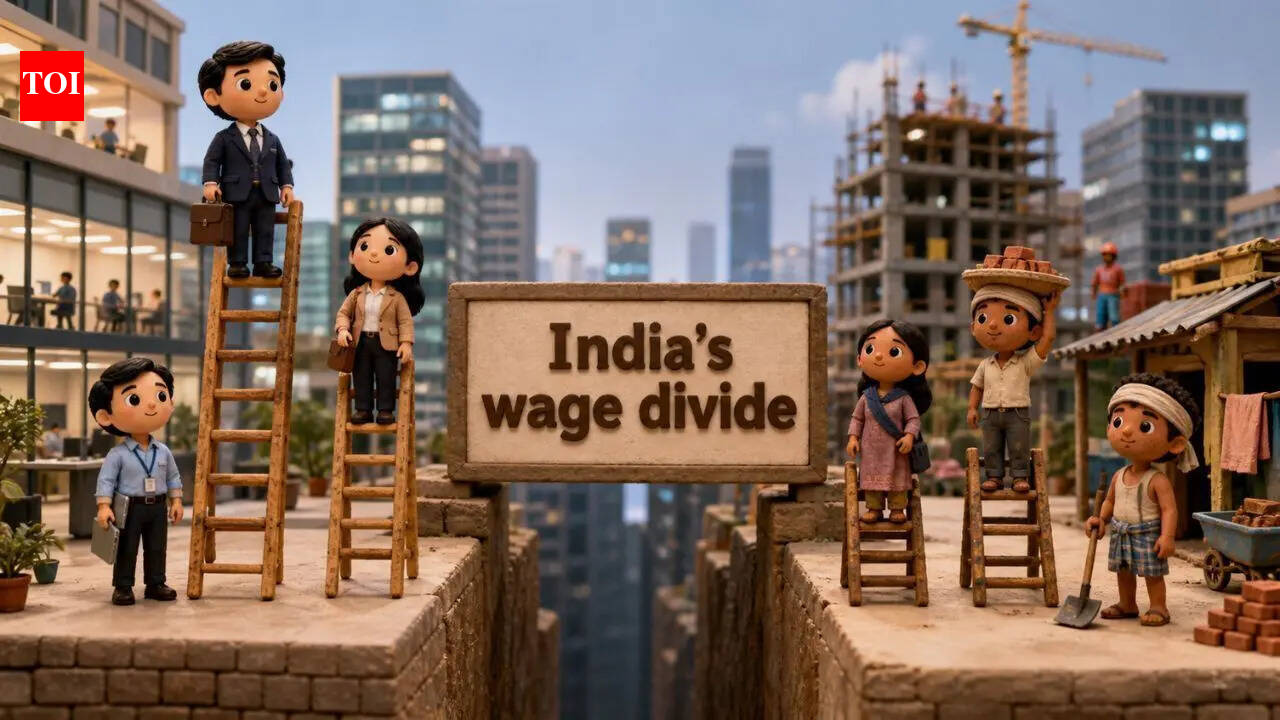
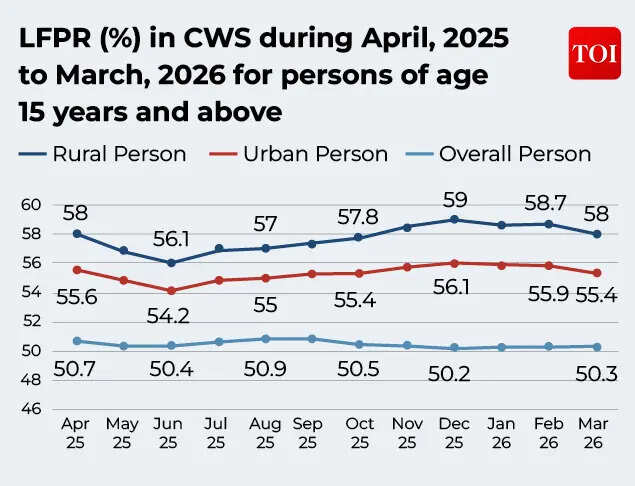
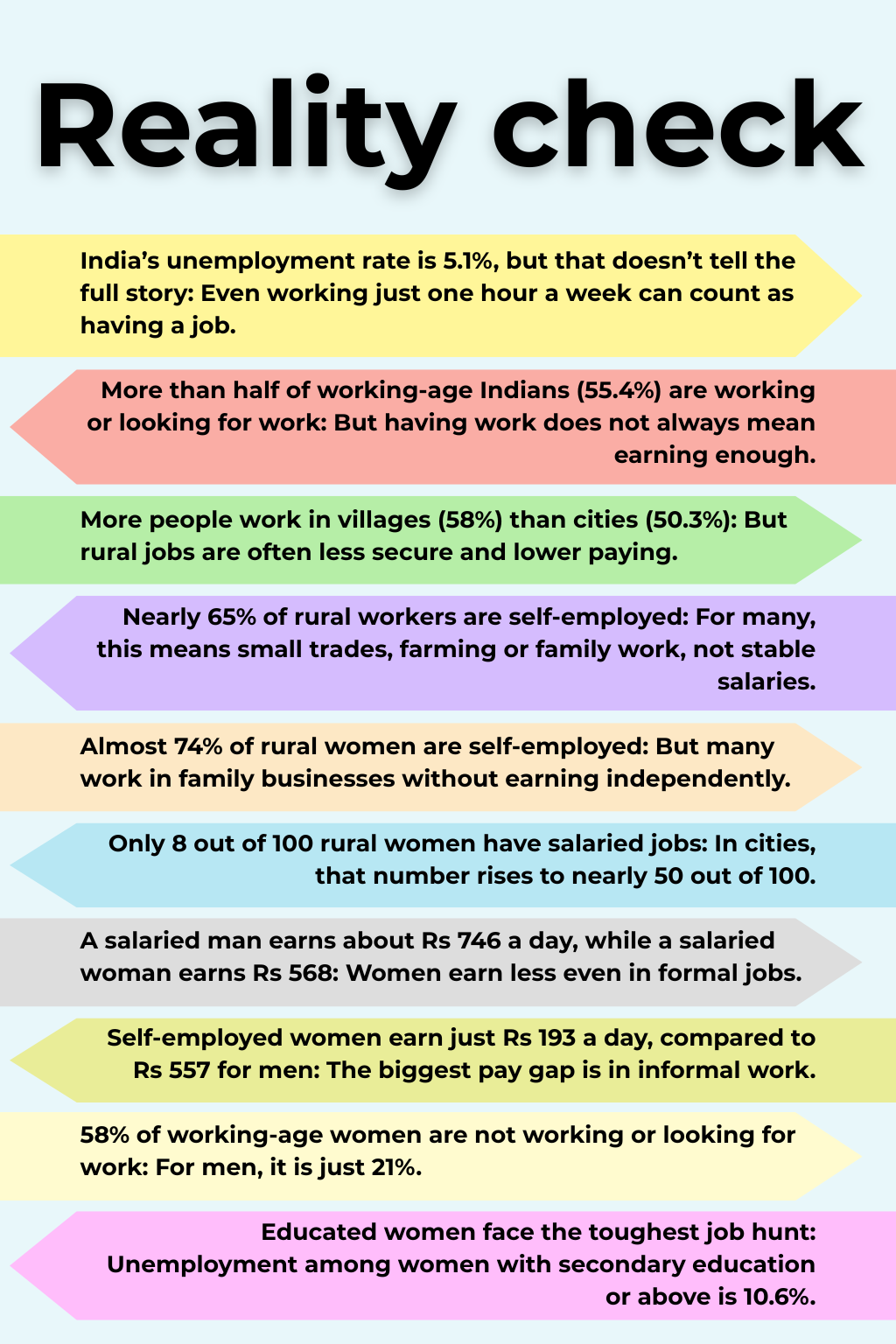
India’s workforce has grown significantly over the past decade—a clear sign of progress on paper. But dig deeper, and the picture darkens.Jobs and unemployment are not just economic terms; they shape everyday life. They are the parameters that influence conversations at home, college choices, election rallies, office corridors and chai stalls alike. From farms and factories to corporate offices, family businesses and gig apps, it is workers in every form who keep the economy moving each day.But more people working does not automatically mean better or safer livelihoods. Higher employment may signal progress, but the real test is whether that work can truly provide the basics — roti, kapda and makaan.By March 2026, the unemployment rate stood at 5.1%, while the Labour Force Participation Rate (LFPR) rose to 55.4% for people aged 15 and above. In simple terms: more than half of India’s working-age population is either working or actively hunting for work.On the surface, this looks like a win. But the story doesn’t end there. Because while rising jobs and higher workforce participation suggest movement in the right direction, the real questions begin when we zoom in closer. Yes, more people are working today, but are they earning enough? And just as importantly, is their paycheck affected by where they live or what their gender is?That’s where the picture starts to get uneven, between regions, between sectors, and ultimately, between opportunity and actual financial security.
A deep dive in numbers
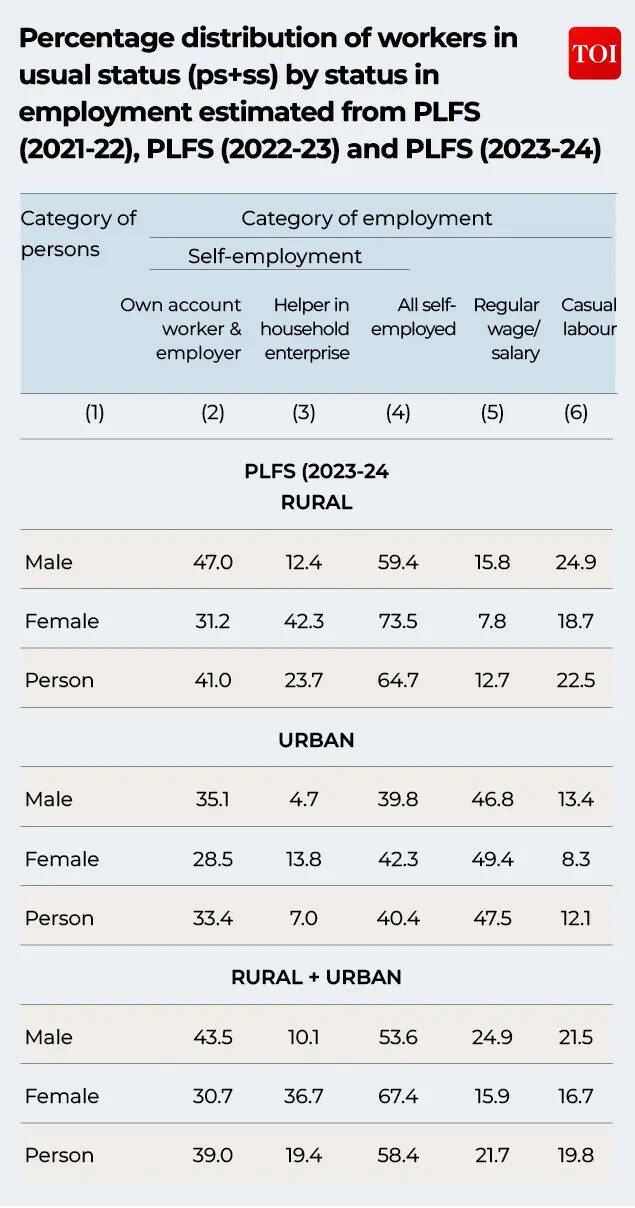
India’s job story may look like a full win at first glance, but a closer look shows the scoreboard is far more uneven. Rural India has a slightly higher workforce participation rate at 58%, compared to 50.3% in urban areas. The Worker Population Ratio (WPR) stands at 52.6%, and unemployment has eased compared to the pandemic years, according to MOSPI’s PLFS report for April 2026.In today’s era, having a job doesn’t always mean financial stability. For many, it simply means staying engaged in some kind of work. A large part of new jobs is coming from self-employment and informal work, street vendors, gig workers, small traders, and unpaid family helpers. Many of these roles don’t guarantee steady or adequate income.Think of India’s workforce as running on two engines: one powered by self-made hustle, the other by steady salaries. The latest PLFS 2023–24 data suggests that which engine drives you often depends on your location and gender.In rural India, the hustle culture is still very much alive. A striking 64.7% of workers are self-employed, making villages far more dependent on personal or family-led work than formal jobs. For rural men, 59.4% are self-employed, while 24.9% still work as casual labourers.Rural women stand out even more, 73.5% are self-employed. Sounds empowering at first, until you look closer: 42.3% are helpers in household enterprises, meaning many are contributing to family businesses rather than earning independently. Only 7.8% of rural women hold regular salaried jobs.Cities, meanwhile, tell a different story, one where the monthly paycheck has a stronger pull. In urban India, 47.5% of workers are in regular wage or salaried jobs, compared to 40.4% in self-employment. Urban men are almost equally split between salaries (46.8%) and self-employment (39.8%).Urban women are slightly ahead in formal work, with 49.4% in salaried roles. For women especially, cities seem to offer something villages often do not: a clearer path to structured employment.Then there’s the gender reality check. Men are more likely to be running their own ventures or working independently, while women, particularly in rural India, are often supporting from within family enterprises. Rural men as own-account workers or employers stand at 47%, compared to 31.2% for women. So yes, women are participating, but often without equal autonomy.
The income divide
India’s salary story shows that not all jobs pay equally, and in many cases, neither do men and women doing different kinds of work.According to PLFS 2023–24, regular salaried jobs offer the best earnings across the board. Male regular employees earned an average of Rs 746 a day, while women earned Rs 568. Even in the most stable category, women still make less, but regular employment remains the highest-paying option.Self-employment, where most Indians work, tells a very different story. Self-employed men earn about Rs 557 a day, around 25% less than salaried men. However, for women, the gap is far sharper: self-employed women earn just Rs 193 a day. Overall, self-employed workers earn 44% less than those in regular jobs, suggesting that for many, self-employment is more about survival than prosperity.Casual labour sits at the bottom of the earnings ladder. Male casual workers earn Rs 459 a day, while women earn Rs 306. In simple terms, a casual worker earns roughly half of what a regular employee makes.The bigger picture is clear: regular jobs pay the most, self-employment offers lower and uneven returns, and casual labour pays the least. But across every category, women consistently earn less than men. The sharpest inequality is in self-employment, where women’s earnings are especially low, often reflecting unpaid or household roles.
Women at work
Beside the wage ladder, women are also behind on the employment front. Among men, 21% of working-age Indians are outside the labour force. For women, that figure is a staggering 58%. While this is an improvement from 74% in 2017–18, it still means more than half of India’s working-age women are neither working nor seeking work, often due to social barriers such as marriage, caregiving responsibilities, mobility restrictions, or lack of suitable opportunities.
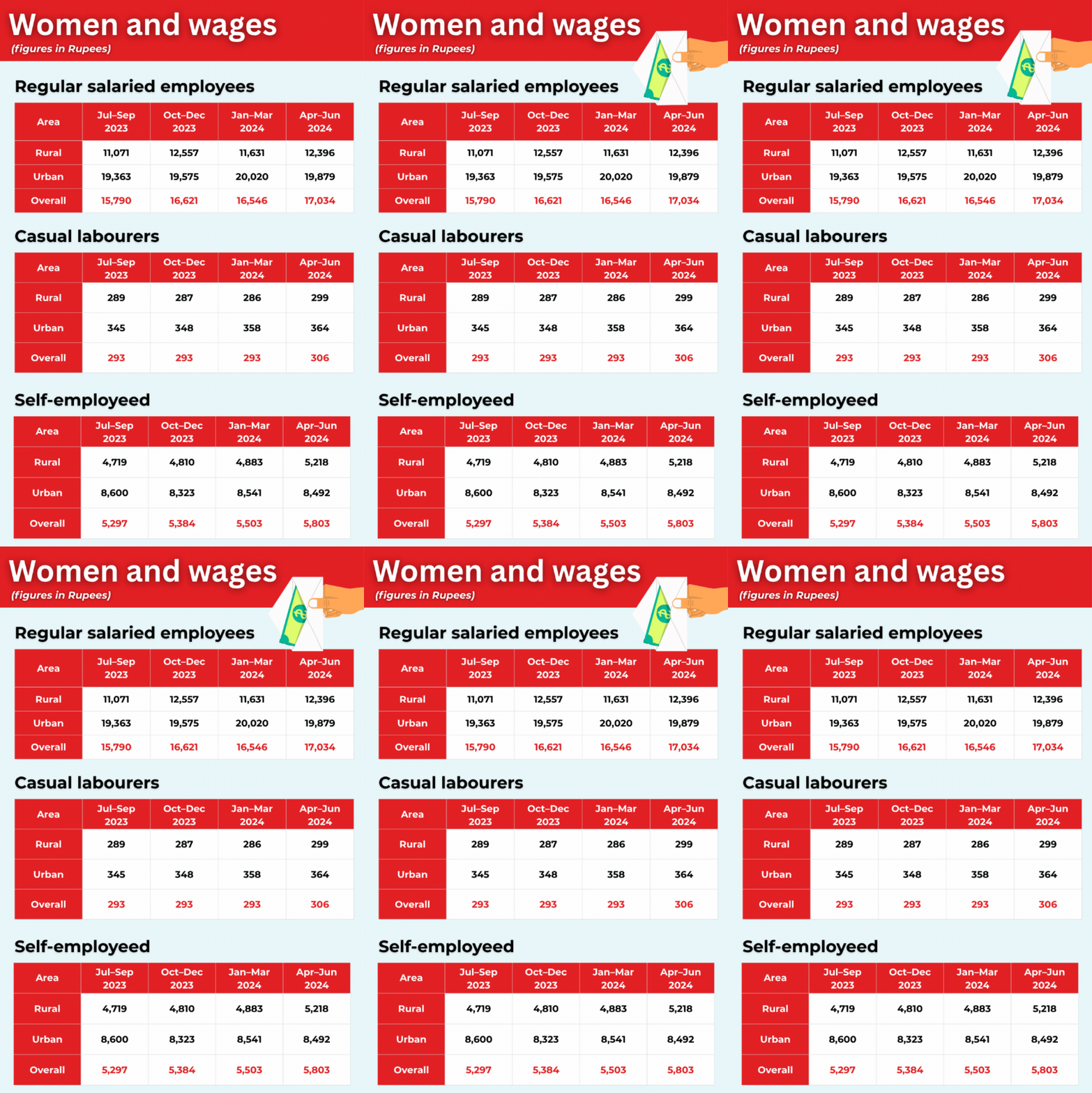
In absolute numbers, male workers increased from 36.5 crore in 2017–18 to 42.7 crore in 2023–24, while women workers nearly doubled from 10.7 crore to 21.3 crore. That sharp rise in women joining the workforce signals greater participation, but the broader reality remains that women are still far more likely than men to remain outside formal economic activity.For men, unemployment fell from 2.4 crore in 2017–18 to 1.4 crore in 2023–24. For women, it rose slightly from 0.6 crore to 0.7 crore. But the bigger story is not unemployment, it is non-participation. Millions, especially women, are simply outside the system.
But what if you are educated enough?
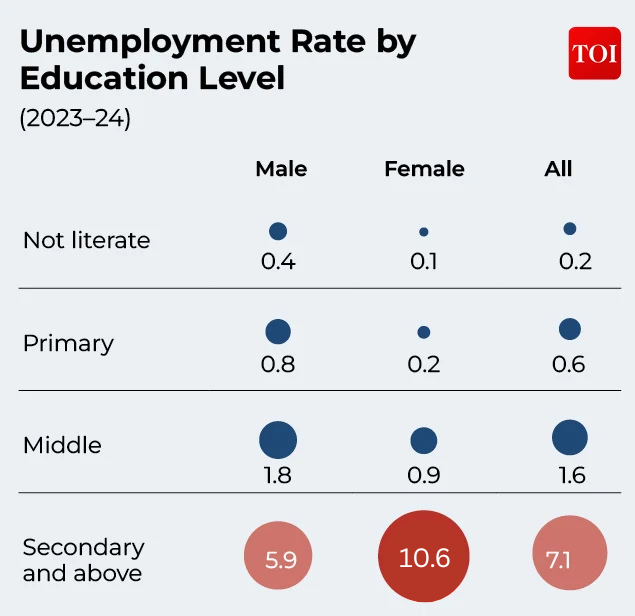
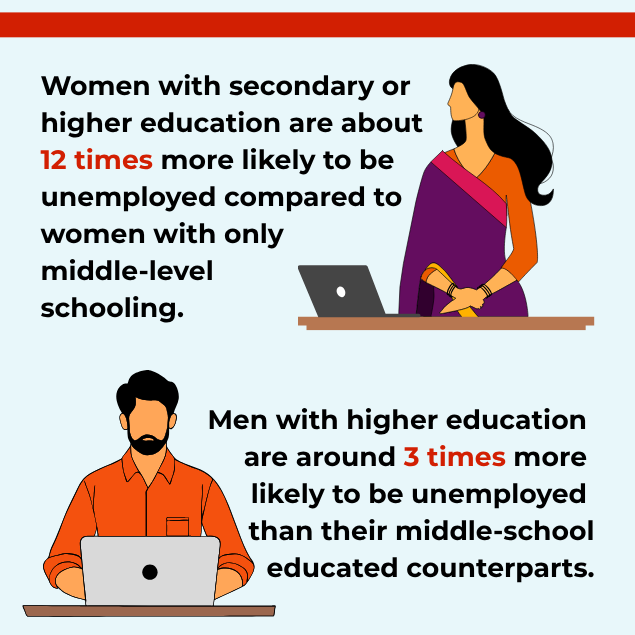
The numbers tell a story that feels a little upside down. In 2023–24, unemployment in India actually rises with education. Among those who are not literate, unemployment is almost negligible at 0.2% overall (0.4% for men and 0.1% for women). It inches up slightly for those with primary education (0.6%) and middle schooling (1.6%). But then comes the twist, among those with secondary education and above, unemployment jumps sharply to 7.1% overall, with 5.9% for men and a striking 10.6% for women.
When ‘employment’ doesn’t mean what you think
Unemployment figures also need a closer look. Officially, unemployment appears relatively low, but the definition is remarkably broad. You are counted as employed even if you worked just 30 days in a year, or even one hour in a week. In other words, employment data may capture participation, but not necessarily stable or meaningful work.Under official definitions, a person is considered employed if they worked for a significant part of the year, or even for just 30 days. Under another measure, working just one hour in a week qualifies as employment.This broad definition helps keep unemployment rates low, but it also hides the reality of irregular work, low earnings, and job insecurity. A person working a few days a month, or contributing unpaid labour, is still counted as employed.So the real issue isn’t just unemployment, it is underemployment.
The youth puzzle: jobless or just invisible?
For young Indians, the story is even more complicated. Unemployment among those aged 15–29 is significantly higher than the national average. Urban young women are the worst affected, with over 20% unable to find jobs. Young men are not far behind.But something curious happens after age 30: unemployment rates drop sharply. Is it because jobs suddenly become available? Not exactly.Many simply stop actively looking for work or move into self-employment. They may take up small businesses, family work, or informal jobs, anything that counts as “employment.”So unemployment falls, but not necessarily because job quality improves.
The bigger picture
Put together, India’s job story is less about how many people are working and more about the kind of work they are doing. The numbers show progress, more participation, lower unemployment, rising female workforce, but they also reveal a deeper imbalance in job quality, income, and opportunity. A large share of workers remain in self-employment or informal roles with uncertain earnings, while gender and geography continue to shape who gets access to stable, well-paying jobs. In the end, the real challenge is not just creating employment, but creating work that is secure, fairly paid, and inclusive, because until then, India’s workforce may be growing, but not everyone is truly moving forward.