
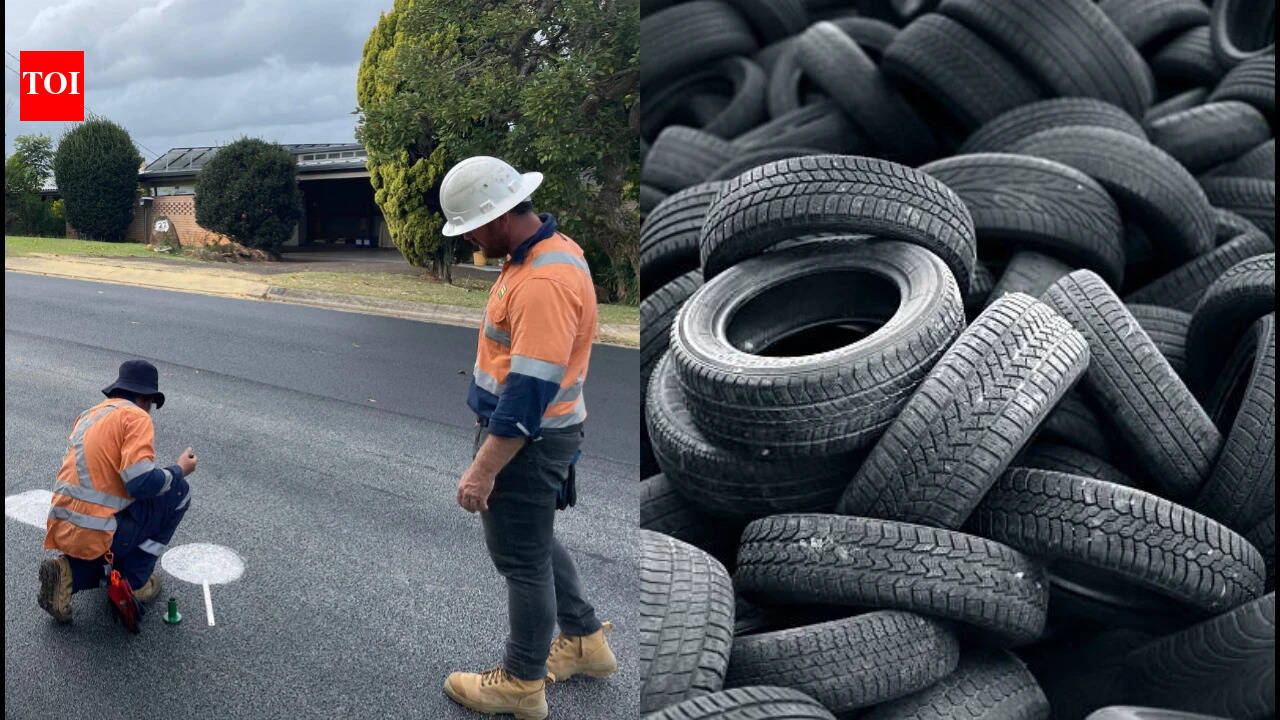
Australia has been looking for better ways to deal with the growing mountain of tyres discarded after heavy use for years. Now Queensland’s Sunshine Coast is testing whether one of the toughest types of tyres can find a second life under motorists’ wheels, states a 2024 report by the Department of Transport and Main Roads, Queensland Government. It has been reported that the Sunshine Coast Council used crumb rubber from end-of-life off-the-road (OTR) tyres in asphalt and road-sealing works along Railroad Parade in Glass House Mountains, Spalls Road in Diddillibah and Perlan Street in Nambour. The 2024 report states that the trial featured OTR tyres with a proven track record in Queensland’s mining and agricultural industries. They recycled their rubber into road material, a potential homegrown solution to a waste stream that’s long been a challenge to manage. Scroll down to read the details.
From heavy industry to local roads
For the uninitiated, OTR tyres are built to withstand harsh environments and are used in industries such as mining, agriculture and quarrying. However, at the end of their working lives, it can be difficult to find productive uses for the large volumes of rubber they contain. The Sunshine Coast project looked into whether that material can instead be used in a circular economy where tyres used by regional industries are processed into crumb rubber and then incorporated into local infrastructure. The project was a collaboration between Sunshine Coast Council, Boral and its subsidiary Allens Asphalt, Carroll Engineering and Puma Energy Bitumen. The project was led by the Australian Flexible Pavement Association, with support from RMIT University and Tyre Stewardship Australia, adds the report.
Rubber testing in the right mix
The trial was intended to determine the best combination of rubber binder and asphalt for roads with different traffic levels. For example, the asphalt mix at the Perlan Road test site in Nambour was 1.7% rubber by total mass. Researchers tested the different mixes over time to test their durability and how they will work with local road conditions. The technical assessment involved accelerated aging tests performed by RMIT. The project also studed the environmental and economic benefits of using recycled OTR rubber in road construction.
Facing a major challenge in tyre waste
Tyre Stewardship Australia estimated that around 245,000 tons of OTR rubber products are produced each year in Australia. Much of this material was disposed of in situ or through low-value or unrecovered pathways. That leads to potential environmental and health issues, and also was a lost economic opportunity. Using the material in roads could help divert more tyres from disposal and create a demand for recycled rubber. The approach also could generate local jobs, business opportunities and regional economic activity.
A model for other regions to emulate
The Sunshine Coast trial could have far-reaching implications beyond the roads being tested out now. If the recycled rubber asphalt was a success the findings could provide councils in mining, agricultural and other OTR tyre using areas with practical information to develop similar local recycling programs. The project was also designed to show how regional industries can create a local market for materials that otherwise had limited end-of-life options.
Building the roads of tomorrow
The trial was part of a broader push to make Australian infrastructure more sustainable, safe and high performing. The project was part of the Sunshine Coast Council’s desire to be Australia’s most sustainable region. It provided a potential means of keeping valuable rubber in use for tyre users and recycling industries. The final results were expected to provide technical and environmental data including life-cycle assessments that could help other councils to decide whether OTR tyre-derived road materials were appropriate for use in their own communities. A road trial on three Sunshine Coast streets that began eventually provided a blueprint to turn one of Australia’s trickiest industrial waste streams into a useful ingredient for the roads of the future.Images Courtesy: istock and Tyre Stewardship Australia