
The fragile ceasefire between the United States and Iran has triggered a bigger strategic question in Washington: if fighting resumes, how long can the US sustain a high-intensity war in the Middle East without weakening its position elsewhere?A new report by the Center for Strategic and International Studies by Mark F Cancian and Chris H Park argues that the US still has enough firepower to continue the Iran war in the short term. But the real danger lies beyond this conflict. Key missile inventories have been heavily drawn down, replacement timelines stretch for years, and any simultaneous crisis involving China or another major adversary would become far harder to manage.The report was published as Operation Epic Fury remains paused under a shaky ceasefire. Its conclusion is stark: America can keep fighting Iran for now, but it may be paying for that war with readiness for the next one.
.
Last rounds? Status of key munitions at the Iran war ceasefire
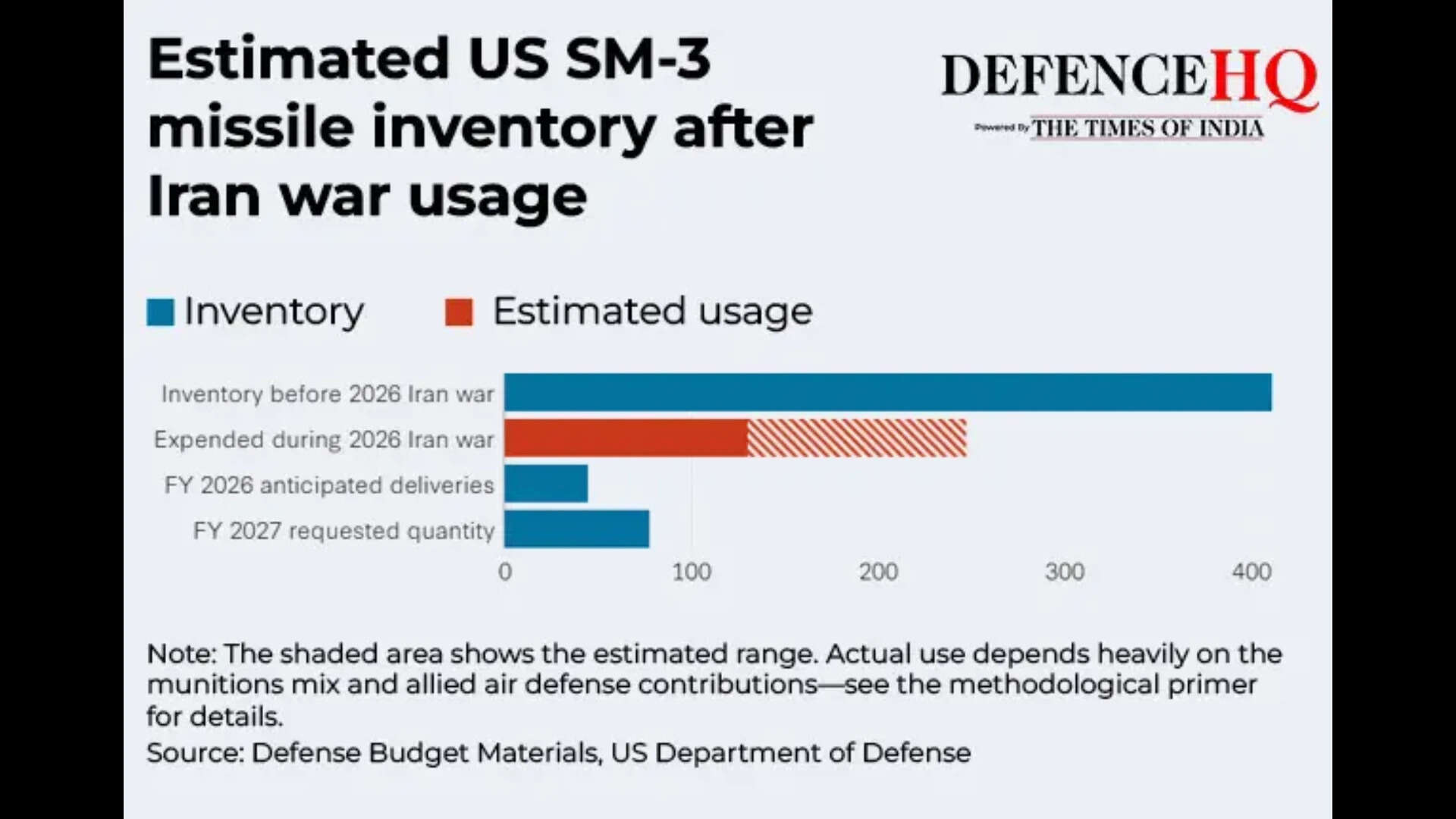
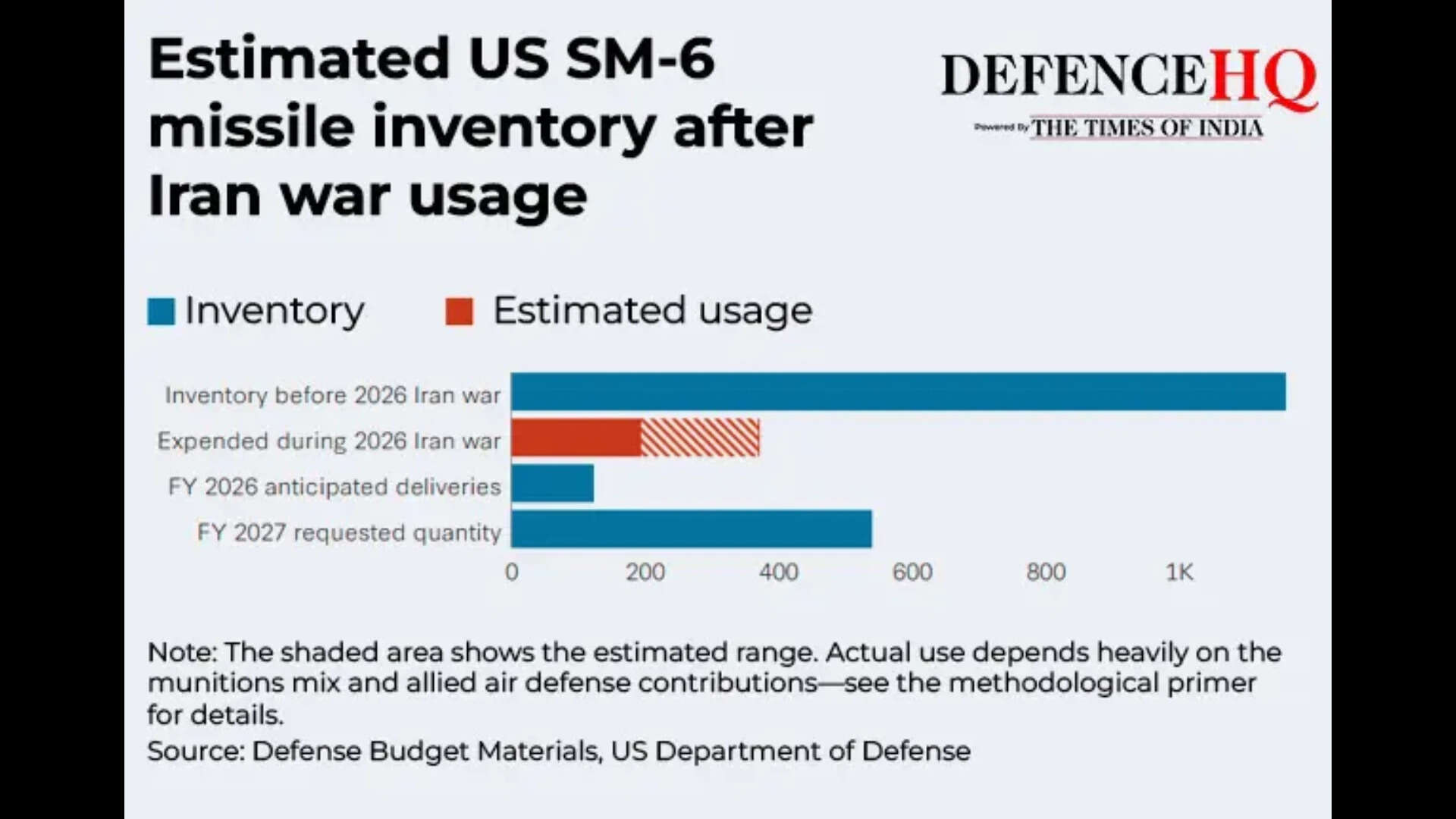
According to the CSIS analysis, seven critical missile systems have borne the brunt of the conflict. These include long-range strike weapons such as Tomahawk cruise missiles, JASSM stealth missiles and Precision Strike Missiles, along with air-defence systems such as Patriot, THAAD, SM-3 and SM-6 interceptors.The report estimates that during roughly 39 days of intense combat before the ceasefire:
- Nearly 50% of Patriot interceptor stocks may have been used
- Around half of THAAD inventories may have been consumed
- At least 45% of Precision Strike Missiles may have been fired
- Significant portions of Tomahawk, JASSM, SM-3 and SM-6 stockpiles were also expended
That means the US military remains combat-capable, but several expensive and hard-to-replace weapons have been burned at unusually high rates.
.
The US can still fight Iran, but not without trade-offs
The report says Washington still has enough bombs and missiles to continue military operations against Iran under most plausible scenarios. That is partly because the character of the war changed over time.In the opening phase, the US relied heavily on advanced stand-off weapons to suppress Iranian air defences, missile launchers and hardened targets. As those threats were reduced, the Pentagon reportedly shifted toward cheaper and more plentiful weapons for routine strikes.That transition matters. It means the US has not exhausted all offensive capability. But it also means many of its most valuable premium munitions have already been spent.Mark Cancian told CNN that high expenditures have created “a window of increased vulnerability in the western Pacific.”In practical terms, the US can continue fighting Iran. The bigger question is what happens if another war starts elsewhere.
.
Why missile stockpiles matter more than troop numbers
Public attention often focuses on aircraft carriers, bombers or troop deployments. But modern wars are frequently constrained by munitions, not manpower.A destroyer without interceptors, a fighter jet without stand-off missiles, or a Patriot battery without reloads has limited battlefield value. In a sustained campaign, industrial capacity becomes as important as combat strength.That is the pressure point emerging from the Iran war. The US defence industry can produce advanced missiles, but not instantly and not in unlimited numbers.Several systems used heavily in the conflict require years to replace.
Tomahawk missiles: Powerful but expensive to replenish
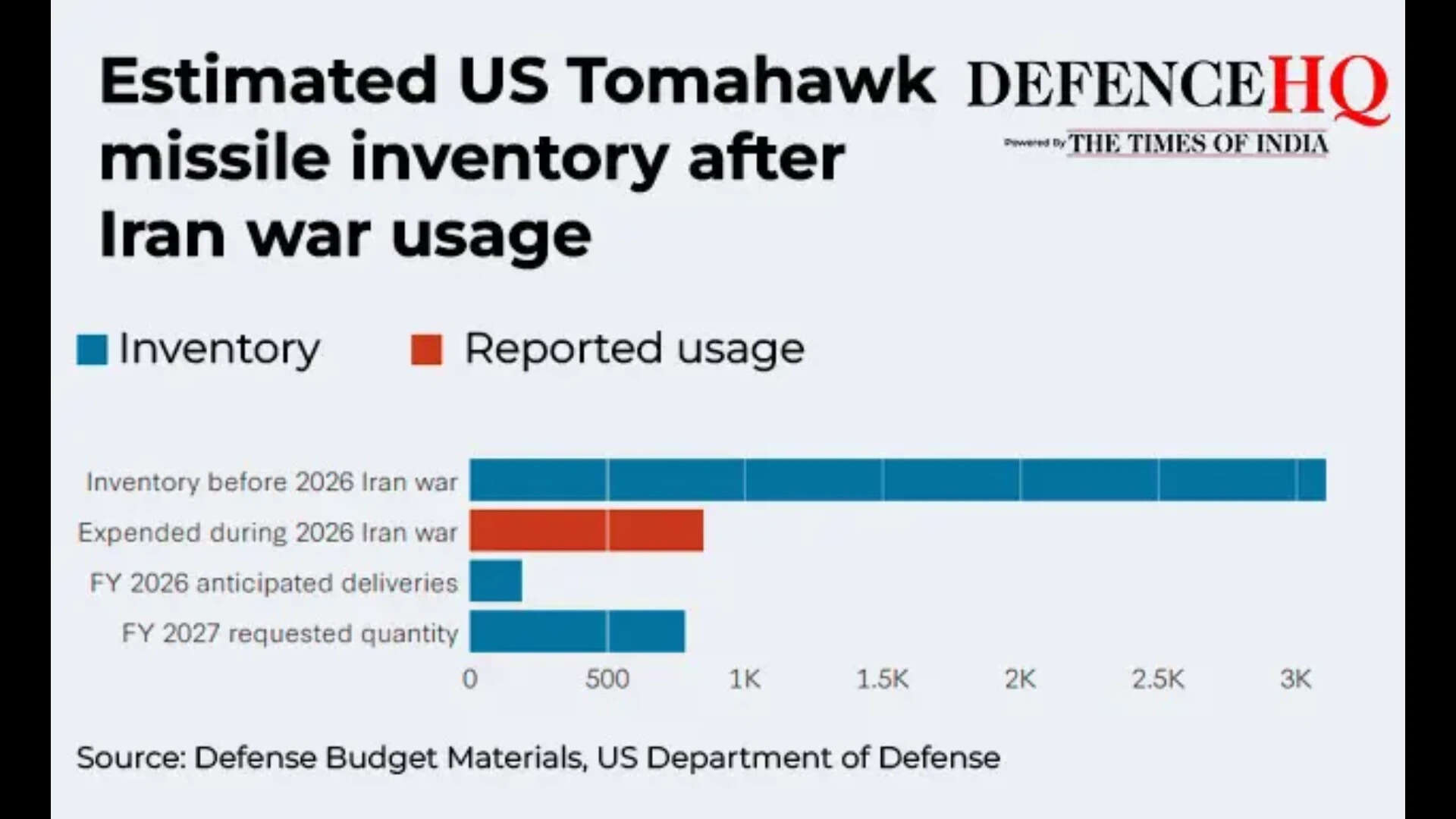
Tomahawk cruise missiles remain one of America’s most reliable long-range strike weapons. Fired from ships and submarines, they can hit targets deep inland without risking pilots.The CSIS report estimates the US entered the war with around 3,100 Tomahawks and may have used more than 850 during the campaign.That represents a substantial drawdown for a weapon that costs millions per unit and takes years to procure in large numbers.The report notes production is expanding, but replenishment is not immediate. Stocks lost in weeks may take years to rebuild.
.
JASSM and PrSM : Weapons built for China also used in Iran
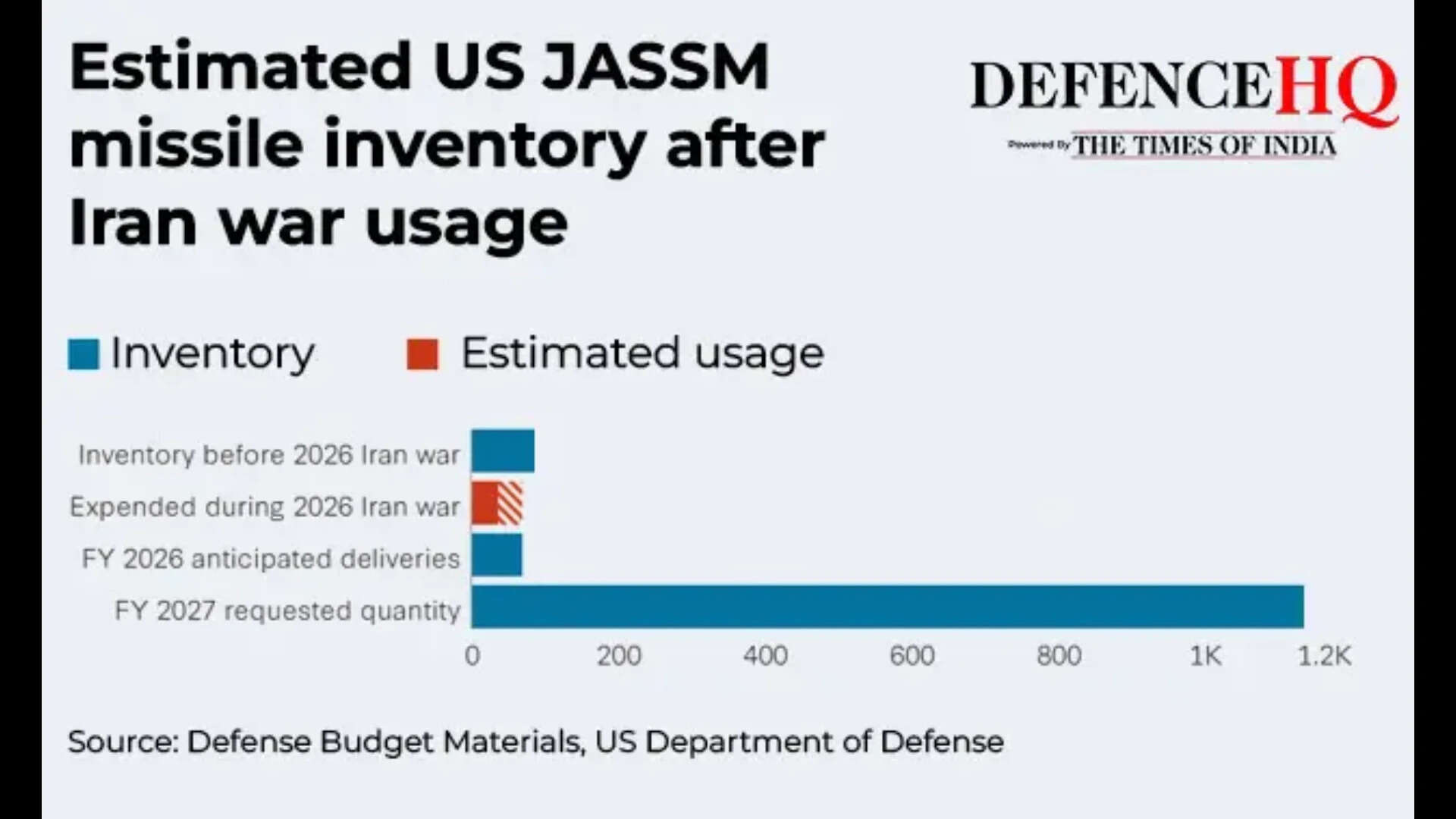
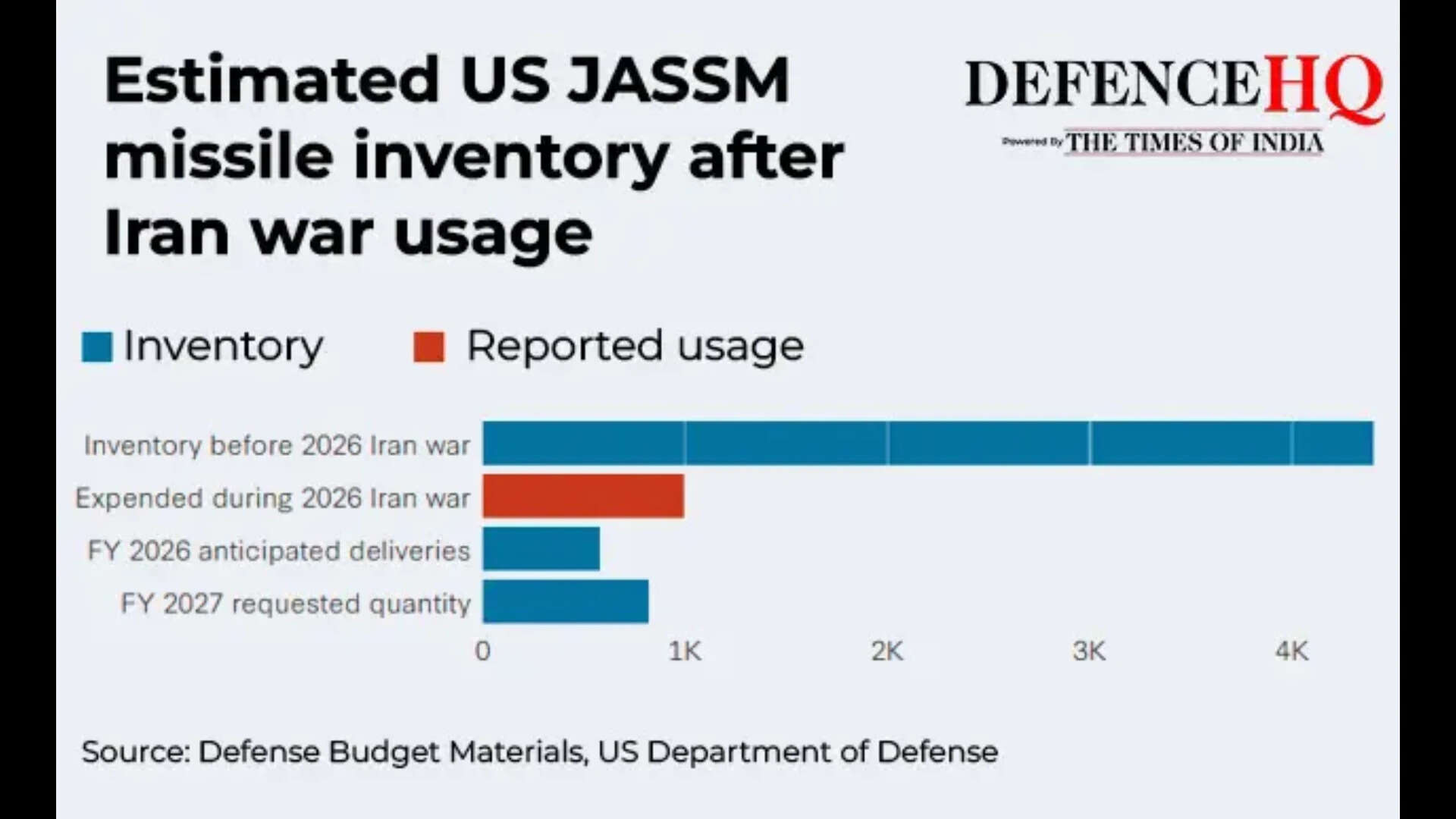
The Joint Air-to-Surface Standoff Missile, or JASSM, is a stealthy long-range missile used by bombers and fighter aircraft. It is considered especially relevant in any future Indo-Pacific conflict because it can strike defended targets from safer distances.CSIS estimates the US may have used more than 1,000 JASSMs in the Iran war.Precision Strike Missiles, or PrSMs, are newer ground-launched missiles designed for long-range Army fires. Inventories were already relatively small because the system only recently entered service.The report estimates that 40 to 70 PrSMs may have been used out of a small prewar stockpile.That matters because both weapons are central to deterrence against China. Missiles used over Iran cannot simultaneously be reserved for the Pacific.
.
Air defence strain: Patriot and THAAD under pressure
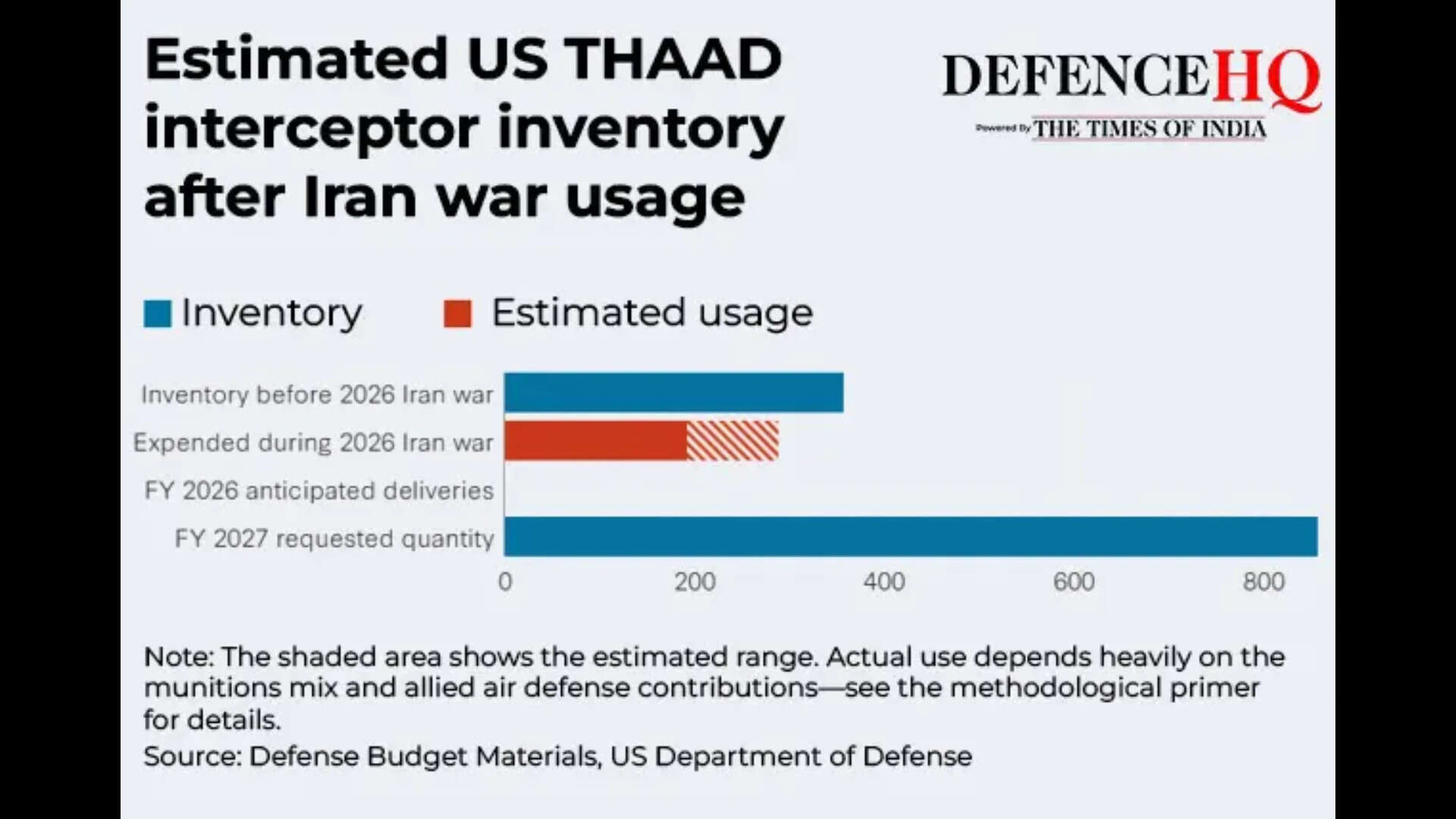
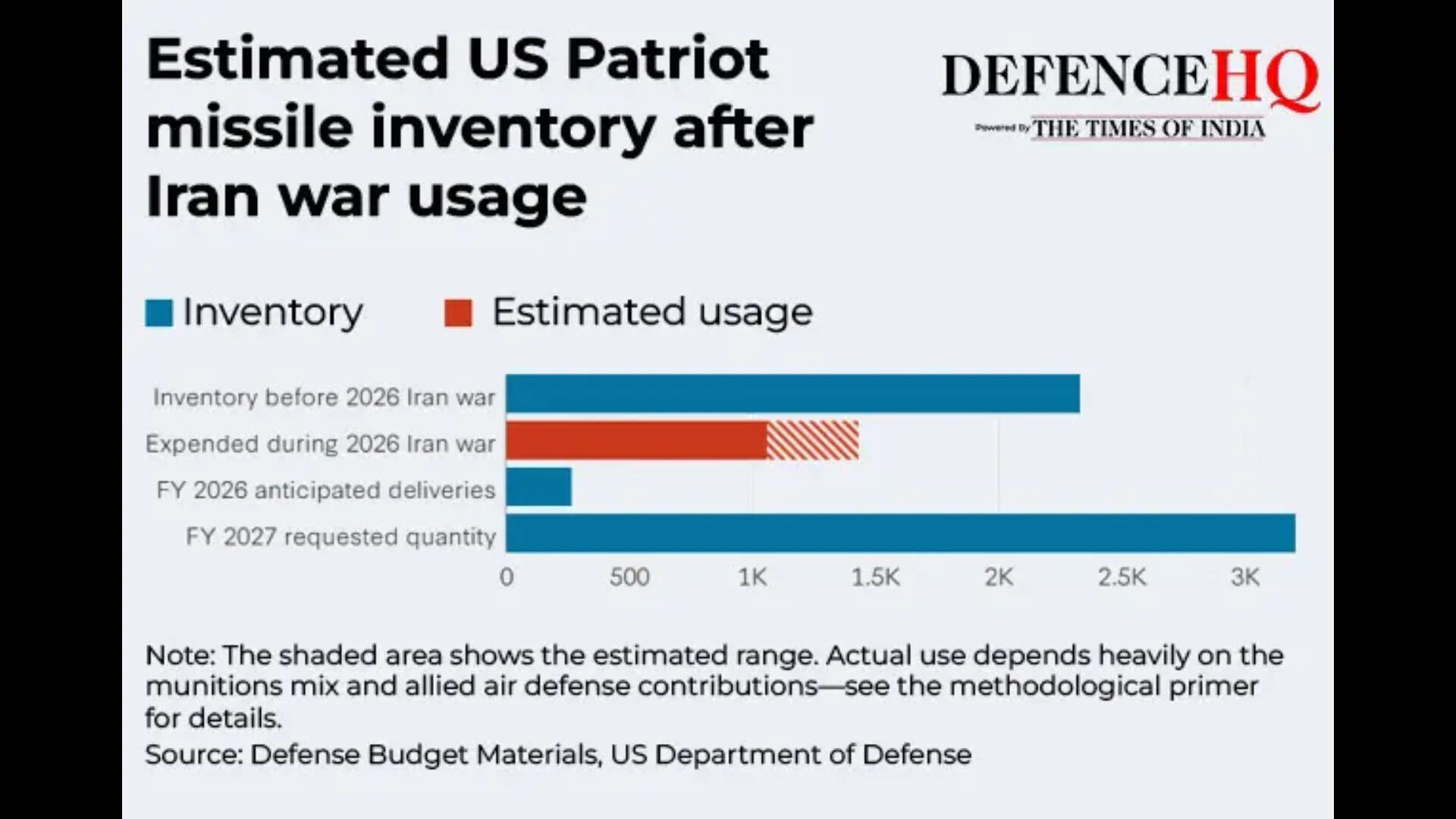
The most serious warning in the report concerns missile defence systems.Patriot interceptors are used against aircraft, cruise missiles and some ballistic threats. THAAD is designed for higher-altitude ballistic missile defence.The report estimates that the US may have used between 1,060 and 1,430 Patriot missiles and between 190 and 290 THAAD interceptors during the conflict.These are not cheap or easy-to-replace systems. They are also in global demand.Ukraine needs Patriots. Gulf allies need Patriots. Asian allies want stronger missile shields. Every interceptor fired in the Middle East tightens supply elsewhere.That creates a strategic allocation problem for Washington.
.
.
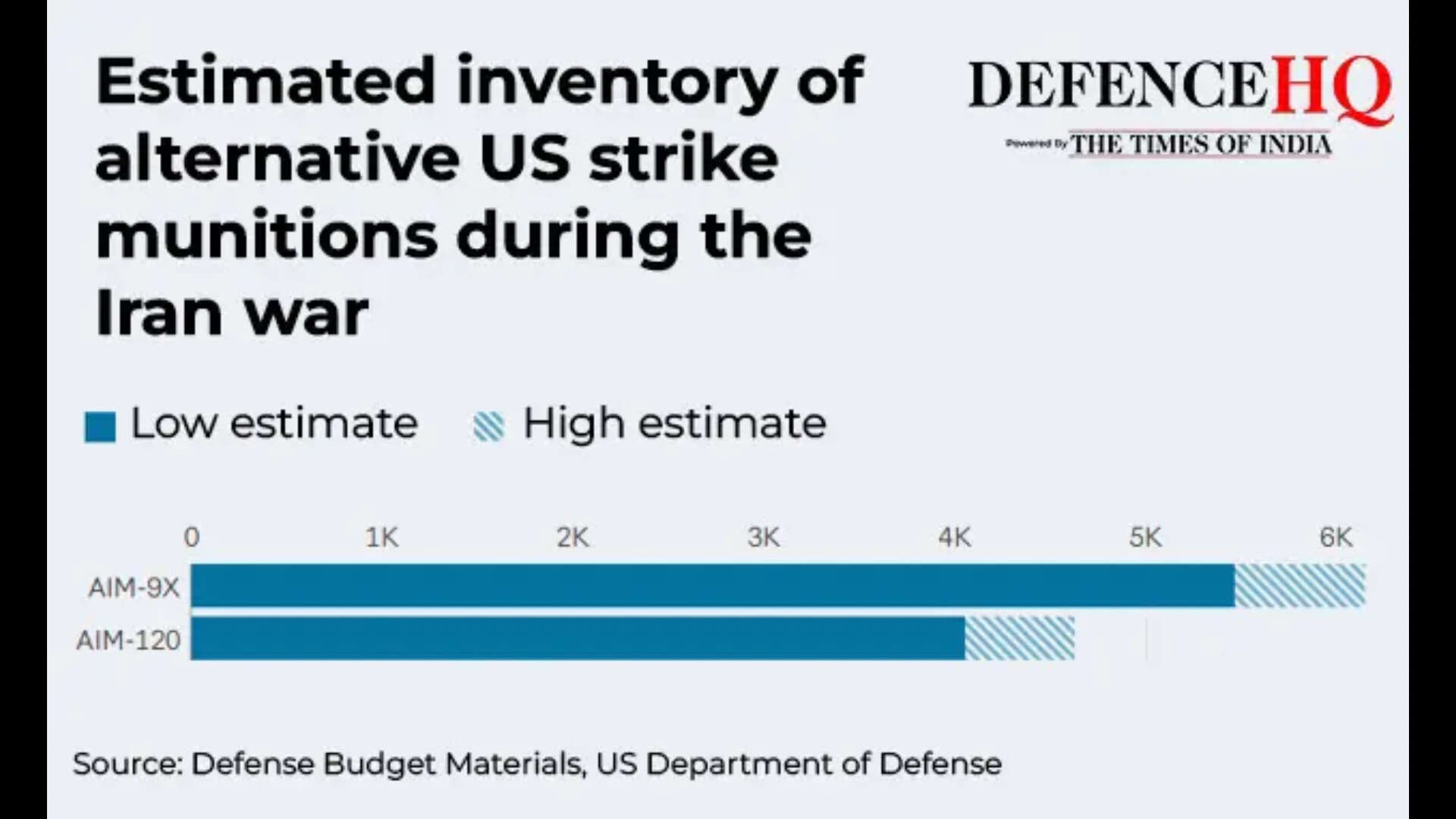
Many cheaper alternatives still exist
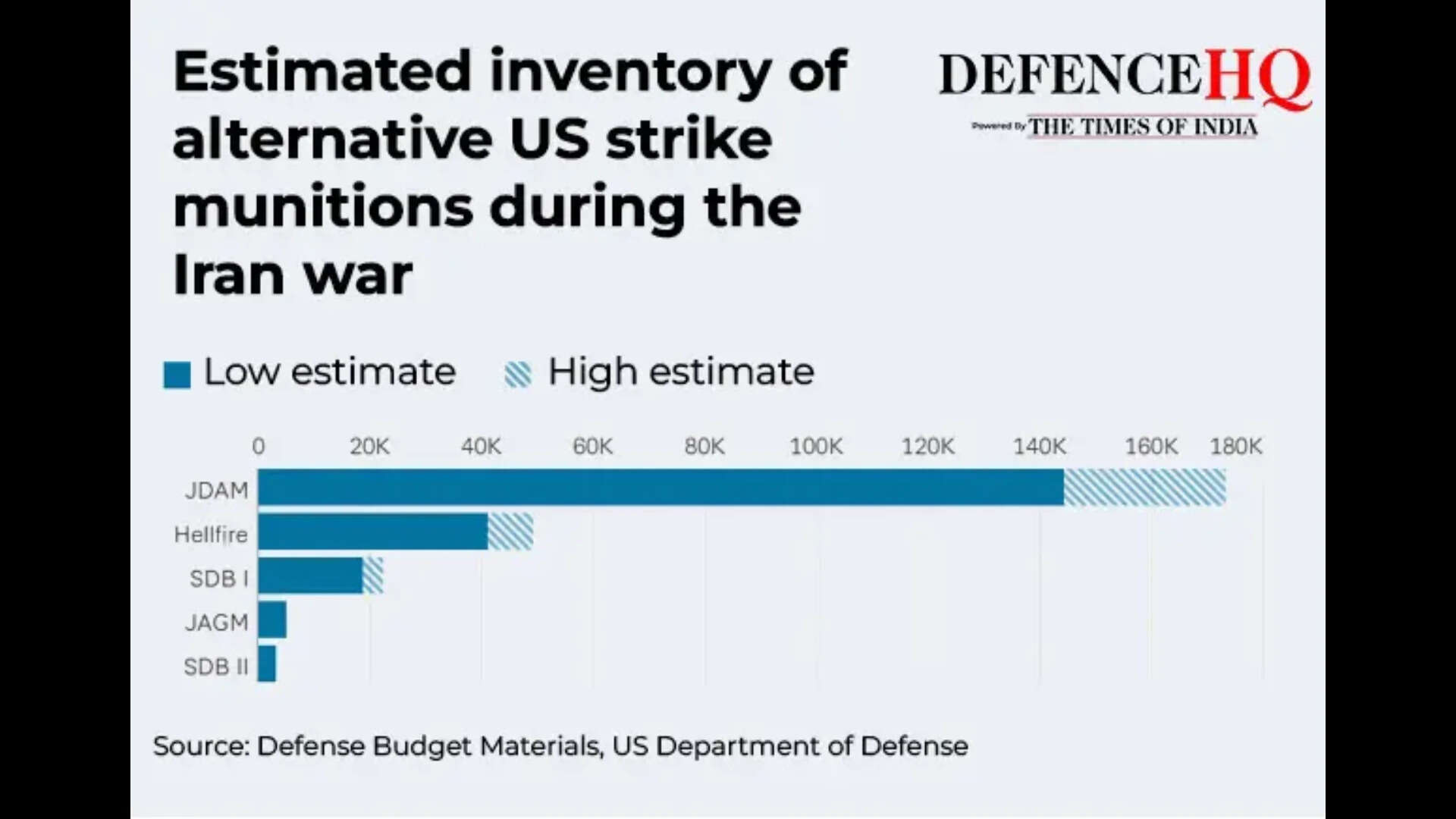
The report also highlights a less alarming reality: the US still possesses large inventories of lower-cost weapons.These include:
- JDAM-guided bombs
- Small Diameter Bombs
- Hellfire and
JAGM missiles - AIM-120 AMRAAM air-to-air missiles
- AIM-9X Sidewinders
These systems are useful for many battlefield tasks and can substitute for premium weapons in lower-threat environments.That is one reason the US can likely continue combat against Iran if needed.However, cheaper alternatives often have shorter range, require air superiority, or are less suitable against hardened or heavily defended targets.So while they preserve combat power, they do not fully replace elite munitions.
.
How long would it take to rebuild?
One of the most important findings in the report is timeline, not quantity.Rebuilding stocks to prewar levels could take one to four years for some systems already in the production pipeline. Expanding inventories to levels considered adequate for a major war could take even longer.Examples cited in the report include:
- Tomahawk: roughly 47 months total delivery cycle
- JASSM: roughly 48 months
- PrSM: roughly 46 months
- THAAD: roughly 53 months
- SM-3 IIA: up to 64 months in some cases
- Patriot PAC-3 MSE: roughly 42 months
That means even if Congress funds replacements immediately, much of the capacity arrives later, not now.
Trump says the arsenal remains deep
The US Department of Defense has pushed back against suggestions of weakness.Pentagon spokesman Sean Parnell told CNN the military has everything it needs to operate at the time and place of the President’s choosing.Donald Trump has also insisted America remains strong, while requesting additional funding for munitions production.His argument is that using weapons decisively now is preferable to preserving them for a future war that may never come.That logic may be politically attractive, but strategists worry it increases risk if another crisis erupts unexpectedly.
.
The China factor changes everything
A prolonged Middle East conflict would be easier to sustain if it were America’s only security challenge. But it is not.US planners must also consider Taiwan contingencies, South China Sea tensions, North Korean missile threats and commitments to NATO.Many of the same missiles used against Iran would be essential in a Pacific war.That is why Cancian warned of vulnerability in the western Pacific. The issue is not that America is disarmed. It is that inventories are finite and geography matters.Weapons sent to one theatre are unavailable in another.
So how long can the US stay at war with Iran?
The short answer: longer than Iran can absorb sustained conventional pressure, but not without rising strategic costs.The US still has enough capacity to continue air and naval operations. It still has large stocks of many conventional munitions. It still commands unmatched logistics and global reach.But the longer the war lasts, the more it consumes scarce high-end missiles, strains production lines, delays allied deliveries and weakens readiness for a future conflict elsewhere.In that sense, the US can stay in the war militarily. The harder question is how long it can do so strategically.
What happens after the ceasefire?
If the truce holds, the Pentagon gains time to rebuild stocks, rotate forces and restore deterrence elsewhere. If it collapses, the next phase of the war may be measured not only in strikes and casualties, but in missile math.That is the warning from the CSIS report: America is not out of ammunition. But every week of war with Iran may make the next war more dangerous.