

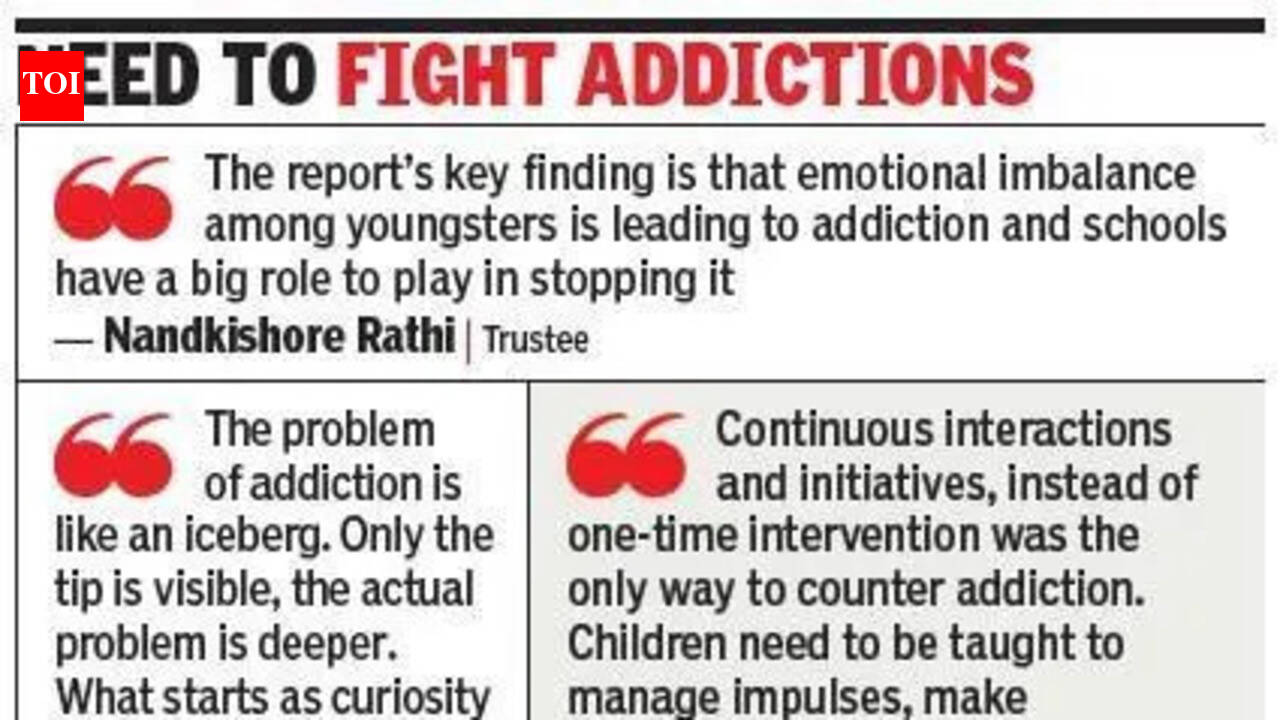
Pune: Jnana Prabodhini’s Institute of Psychology on Friday published a survey which highlighted the ill-effects of alcohol in youngsters with one out six older adolescents having tried it at least once, even as the silent risk of energy drink was revealed with its known risks of increased heart rate and anxiety.The survey said nearly 90% of the city’s youngsters were aware of the ill effects of alcohol. Around 8% of 13-16 year olds, 10% of 17-19 year olds and 17% of 20-22 year olds had tried alcohol/drugs/or tobacco at least once. It translated to at least one in six older adolescents having alcohol once. Energy drinks available in every neighbourhood store were also a dominant addiction said researchers. They said awareness about its harm was low among the youth, but such drinks were extremely popular during exams or late-night activities, despite side effects.The survey was conducted on 1,887 adolescents in the age group of 13-22 across Pune between Jan and March 2025. It showed the vulnerability to addiction increased with age and exposure, but could be reduced through stronger emotional regulation, supportive families and engaged schools.The Tarachand Ramnath Seva Trust had commissioned the survey report which was launched by Pune police commissioner Amitesh Kumar at the commissionerate on Friday.The study looks at five key areas of risk — alcohol, tobacco, drugs, energy drinks and digital use.Research coordinator Sandhya Khasnis said parents underestimated their wards’ digital and substance use. The report called energy drinks a silent risk because the awareness of its harm was low and it was viewed as a performance booster. Consumption of such drinks was rising across all age groups, she said, adding: “Availability is very high and that is worse.”Trustee Nandkishore Rathi said high availability, early exposure and changing attitude lead to addiction. “The report’s key finding is that emotional imbalance among youngsters is leading to addiction and schools have a big role to play in stopping it,” he said.Principal investigator of the survey report Anagha Lavalekar compared the problem of addiction to an iceberg. “Only the tip is visible, the actual problem is deeper. What starts as curiosity or peer pressure turns into addiction. Internet addiction is an issue across age groups. It is particularly dangerous for children, because they are unable to draw the line between its use and abuse. Another thing is that over 70% of the children observed people in their surroundings. If they felt a particular substance abuse was acceptable, they started it themselves,” she said.As per the report, 60% to 70% of adolescents reported that alcohol, tobacco or energy drinks were easily available in their neighbourhood or through friends. Digital platforms were accessible 24 hours a day. Older adolescents (17-19 years) reported the greatest exposure to both substance and digital addiction. Peer gatherings, online challenges, competition/games and birthday parties and celebrations were common triggers.Saiyam Institute runs an addiction prevention initiative since 2019 for adolscents in the age group of 11 to 16 years. The head, Sujata Diwanji, said continuous interactions and initiatives, instead of one-time intervention was the only way to counter addiction. “Children need to be taught to manage impulses, make thoughtful choices and become more resilient in real-life situations through engaging activities, reflective exercises and personal development practices. The key is collective effort and sustained commitment to prevent addiction,” she said.The study further showed that vulnerability to addiction was more when stress was high or perceived as unmanageable, there was little family conversations leading to isolation, peer influence was pushing FOMO driver behaviours and digital dependence had already stepped in — all forming a vicious circle.