
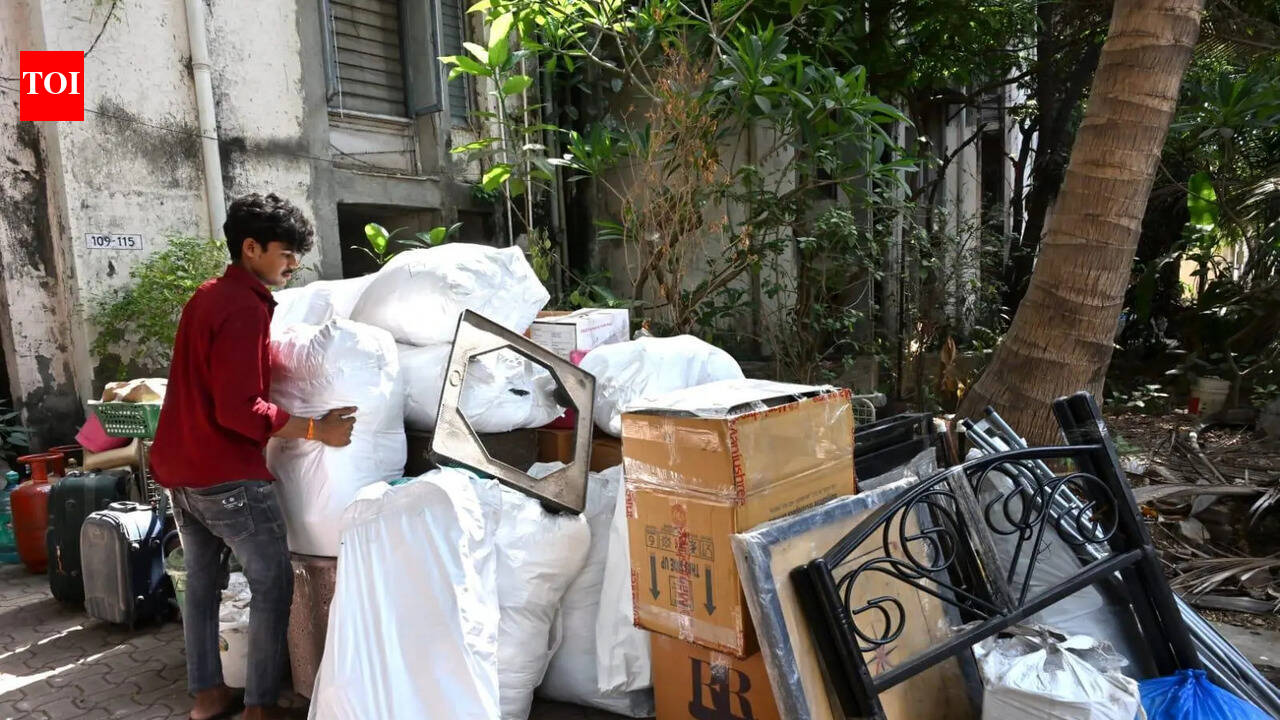
Mumbai: Unlike beginnings that arrive with celebrations and fanfare, endings can often be muted, marked by silent departures. Air India’s Mumbai story is a case in point. The Air India and Indian Airlines colonies that sprawl across 184 acres in Kalina, with the first of the four constructed way back in 1955, have moved into history. In the past few weeks, the last of its 150-odd residents, most of them employed with govt-owned AI Engineering Services Ltd and AI Airport Services Ltd and a few with private carrier Air India, began vacating their flats. On Sunday, the last of the occupants will leave, and Mumbai International Airport Ltd (MIAL) will take possession of the land leased to it two decades ago. The colonies were Air India’s last real-estate footprint in Mumbai, the city of its birth.The airline marked the city with its growth milestones through the second half of the last century. The first staff colony was followed by three more through the 1980s. The iconic Air India tower came up in Nariman Point in the 1970s; for decades, it was the most recognisable landmark on Mumbai’s skyline till it was sold to the state govt in 2024. Now the four colonies with their 1,683 flats across 106 buildings have moved from govt-owned AI Asset Holdings Ltd (AIAHL) to MIAL. Though AIESL, AIASL and AIAHL are govt-owned entities and the airline Air India is now a private company, for the public at large, the colonies were associated with the brand Air India. The airline may still fly to Mumbai, but it no longer has a home here.For four long years after Air India was privatised in 2022, the staffers and their unions fought for their right to stay in the quarters till retirement. From the labour court to Bombay High Court, the battle eventually reached the Supreme Court, where they lost the case last year. The Supreme Court gave occupants time till Nov 30, 2025, to vacate the premises. Thereafter, MIAL granted residents’ request and allowed them to stay till the end of the academic year so that the kids would not be affected, and the eviction date was informally moved to May 31.TOI visited the colonies last week and found the place caught between abandonment and stubborn life. The two- and three-storey staff quarters were in poor condition, some too dilapidated for habitation, stairwells littered with concrete fallen from ceilings, exposed metal ribs, debris underfoot, massive cobwebs cutting off corridors. The few remaining residents were packing their belongings. And yet the colony itself was verdant. Ruderals had taken over the unpaved ground around the buildings. Trees, mango, jackfruit, custard apple, guava, jamun, etc, probably planted years ago by staffers, stood unruly and unpruned. “We’re moving to a rental in an old building in Kalina, but eventually we will move to Virar. I’ve lived here for over 3 decades, my children grew up here, all my memories are tied to this colony,” said an AIESL staffer, requesting anonymity.In 2022, there were 600 families; most of the Air India staffers left in the following years. “Two flight attendants employed with Air India left some days ago. Most of the other occupants are from AIESL and AIASL; they will leave this weekend,” said George Abraham, general secretary, Aviation Industry Employees Guild, one of the unions that fought against eviction. Advocate Ashok Shetty, who represented the unions, said: “Our argument was that the accommodation was an ‘essential service condition’ and a ‘promise’ laid out in Air India’s Housing Allotment Rules and these can’t be arbitrarily changed.” Even as the fight moved from Labour Commissioner to the courts, the AI, AIESL and AIASL management applied mounting pressure on the colony residents. “It varied from penal occupancy charges amounting to normal rent plus double the market rate deducted directly from salaries. In some cases, it took nearly 75% of a month’s pay. Concessional travel benefits were withheld. Retirement dues, including leave encashment, VRS compensation, PLI arrears, were held back. Water bills, electricity bills, payments to colony security and maintenance staff went unpaid for months,” alleged Abraham.The Kalina colony was never merely residential. Its cricket ground, where MCA held coaching camps and the BCCI ran India’s women’s team practice sessions, produced Prithvi Shaw, Yashasvi Jaiswal, Ajinkya Rahane and Shivam Dube. A football ground in the old Air India colony sent several players to the national level. Two schools served roughly 3,000 students. The schools are govt aided and have not received eviction notices, so will continue.Beyond sport and schooling, the colony’s value was strategic. When an Air India Express aircraft skidded off the runway during the July 2018 monsoon floods, paralysing the city, it was Kalina engineers who walked to the airport to retrieve the disabled aircraft; their suburban colleagues could not get through for hours. “When international cargo flights landed carrying PPE and medicines during the first Covid lockdown in 2000, colony residents, including loaders, labourers, engineers, walked the 10-minute road to the airport and unloaded the freighters themselves,” said M P Desai, president, Air India Staff Colony Consumer Co-operative Society.