
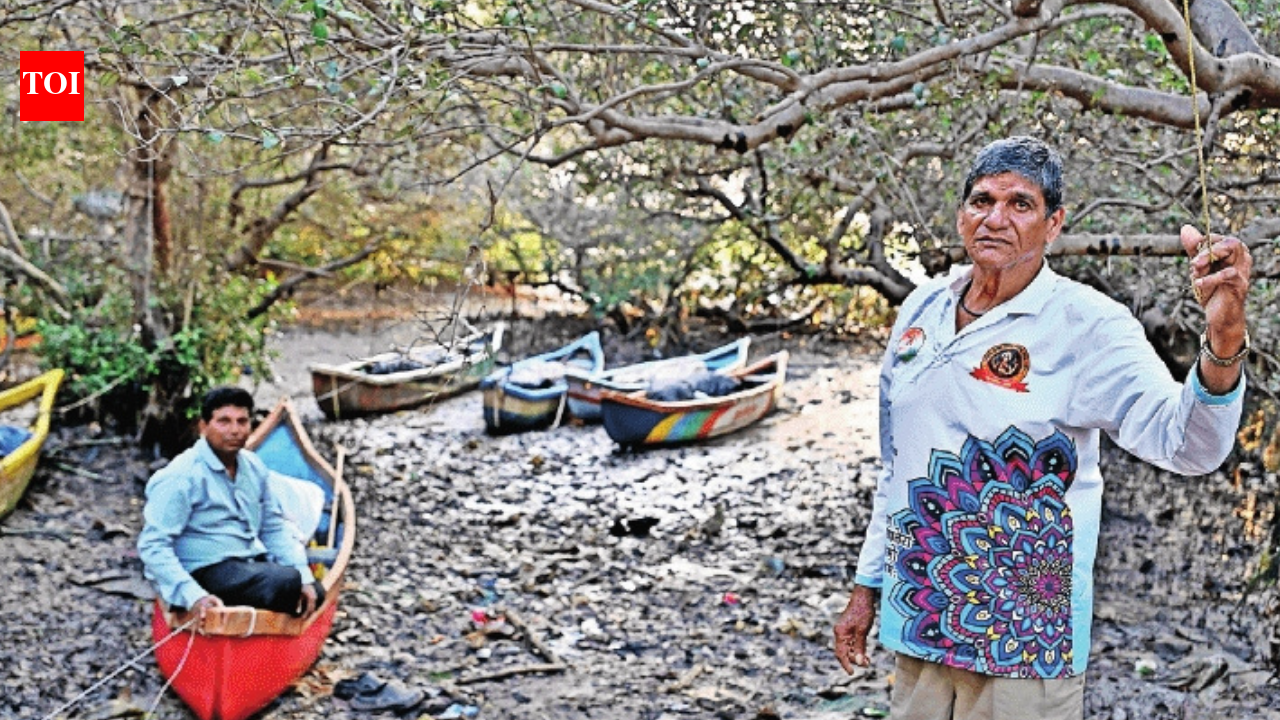
Every few days, 71-year-old Anil Bhandari rows his small boat out of the mangroves of Charkop and up Manori creek to fish—boi, catfish, and, if he’s lucky, a few baskets of prawns. The catch hasn’t been as good in recent years due to pollution from the city. But the creek remains an important source of livelihood for Anil and 50 other families in the Charkop koliwada—as well as a source of cheap protein for the whole community.That livelihood could end with the new coastal road planned from Versova to Bhayander. Although the road’s alignment was altered to curve around the Charkop koliwada—rather than through it as a previous design had proposed—the construction of approach roads and bridge will destroy the aquatic environment, say local fisherfolk. Apart from the disturbance to the creek waters, almost 14 hectares of mangroves will be removed from here, and with them will go the fish nurseries, birds, and other small wildlife. Already, the noise of drilling for the approach road is disturbing the fish, says 51-year-old Sanjay Bhandari.Charkop koliwada is one of several traditional fishing hamlets along the city’s creeks. It is several hundred years old, say locals, and dominated by Som-kolis, a community that both fished and farmed, including toddy trees. The hamlet was originally on an isle on the creek and was first joined to the mainland with landfill by the British, according to local resident and architect Gauri Satam. Since the 1980s, the city has been creeping ever closer to the village, with industries, affordable housing layouts, and roads slowly filling in the intertidal land. As a child, 40-something Dhiraj Bhandari, head of the Charkop Koliwada Machhimar Sahakari Samiti, could see straight down to the fishing hamlets near Borivli, a view now blocked by buildings.
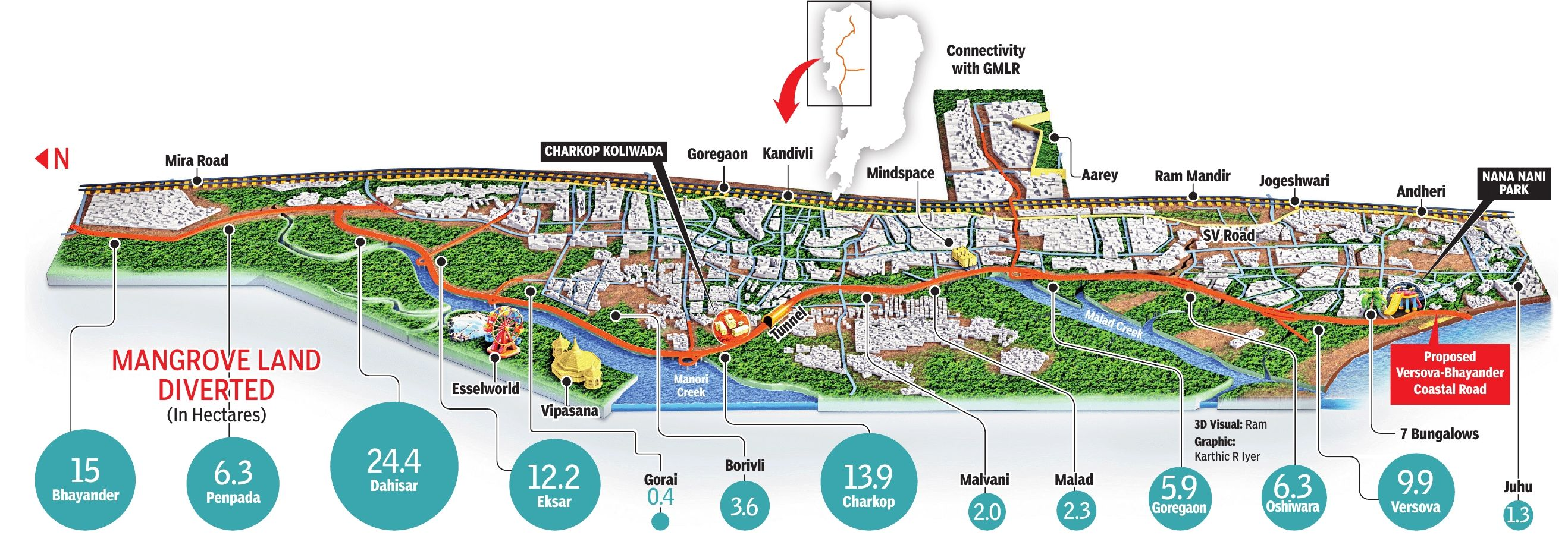
The original habitat can still be glimpsed, however, in the small village farm, with its vegetables and mango trees; the mud flats that double up as a cricket pitch at low tide; and the shrinking patches of intertidal mangrove. These patches served as important sponges during the deluge of 2005, when the nearby Poisar river flooded, says Satam. One problem, she adds, is that while creek mangroves have been classified as reserved forest, the intertidal mangrove patches closer to urban development remain unrecognised, and at risk.The coastal road project includes a plan to restore the mangroves and creek in some places once the work is done. But such restoration isn’t easy, and could take many years, say locals. The authorities have not yet offered compensation to Anil and others who depend on fishing here, including some 75 women involved in selling, either locally or at the Malad fish market. “If the environment for fish is gone, then fishing is gone,” says Dipti Bhandari, head of the local mahila mandal.Like many of the younger families here, Dipti and her husband, Dhiraj, are no longer actively involved in fishing. But the couple helped revive the long-dormant Macchimar Samitik more than a year ago to represent the community’s concerns better. Dipti is from the Worli koliwada, which put up a fight five years ago over the coastal bridge there. Even now, she says, prawn fishing hasn’t fully recovered off Worli’s waters. Says Dhiraj, “This government puts a lot of value on cars and roads, but don’t mangroves and fish also have value?”