

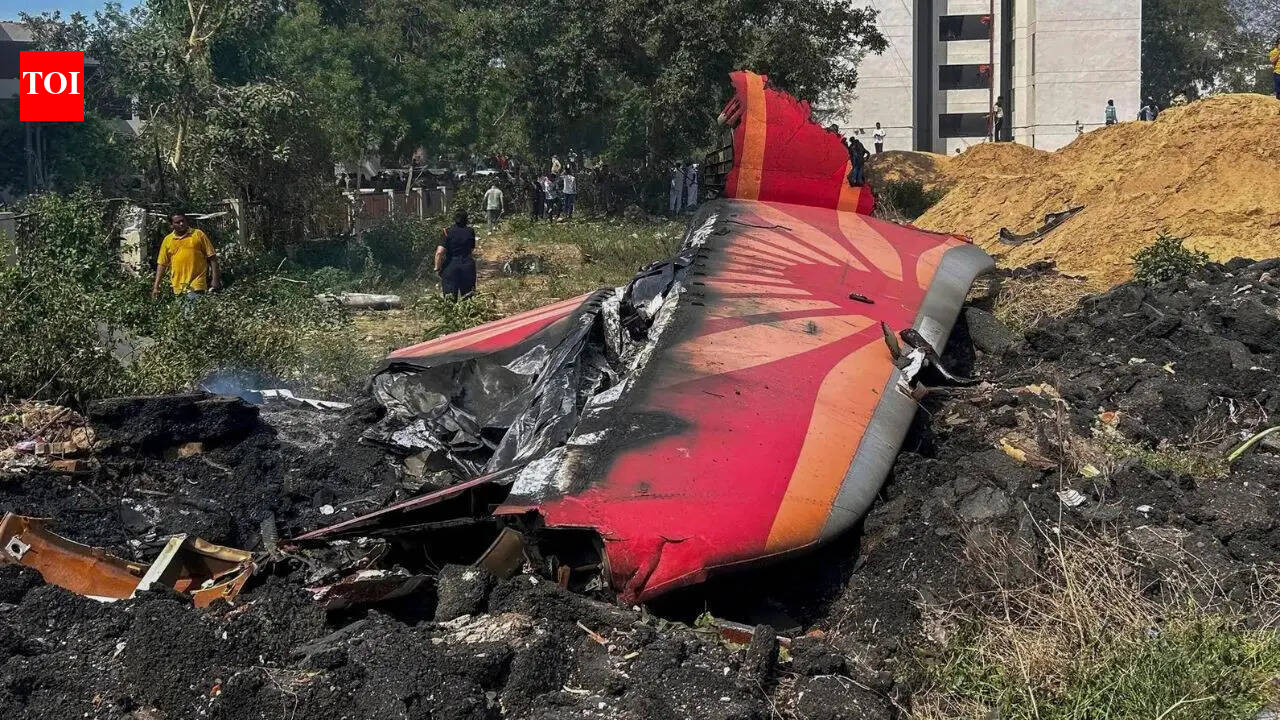
NEW DELHI: A man who entered the mortuary set up after the devastating Air India AI-171 crash in Ahmedabad has recounted chilling scenes from inside the hospital, saying he witnessed “things he can never unsee.” According to him, the captain’s body was found seated upright, with his uniform largely intact.On June 12, a Boeing 787-8 Dreamliner lifted off runway 23 at the Ahmedabad airport, bound for London Gatwick with 242 people aboard. Just 32 seconds later, the plane began losing altitude.By 1.39 pm, one of the pilots issued a desperate “Mayday, Mayday, Mayday” call before the aircraft crashed into the BJ Medical College hostel complex located around 1.6 km from the runway.A total of 241 people onboard died, along with 19 people on the ground. Only one passenger, Vishwash Kumar Ramesh, seated in 11A, survived the crash. Ramesh reportedly escaped through a gap in the fuselage moments before the aircraft was engulfed in flames.However, months after surviving the disaster, he continues to suffer severe emotional trauma and grief over the death of his elder brother Ajay, who was travelling with him, Daily Mail reported.
Pilot still holding controls, mother clutching child
Romin Vohra, who lost three family members in the crash, told the Daily Mail that he managed to enter the mortuary at Ahmedabad hospital while trying to identify the victims.During the Covid pandemic, Vohra had worked as a pathology lab assistant at the hospital and used his contacts to gain access. “There I saw things I can never unsee,” he said.According to Vohra, the remains of victims were laid across the floor of the mortuary, including severed limbs and badly charred bodies. He recalled seeing a burnt mother still holding her child and the skull of a little girl that he desperately tried to identify using a photograph of his niece.Vohra also claimed he saw the body of Captain Sabharwal placed separately in a corner of the room. He said the pilot’s back was badly burnt, but the front of his body and uniform remained largely intact.His uniform, a white shirt with four gold stripes on the shoulders, a dark tie and trousers, was also intact, and he was still wearing his shoes, the Daily Mail reported quoting Vohra.He further claimed that the captain appeared to still be in a seated position and was clutching the aircraft’s double-handled yoke, or steering column, which may have broken off during the crash impact or while he was being removed from the cockpit.
Pilot error theory under scrutiny
Following the Air India AI-171 crash, speculation emerged in sections of the media and aviation forums that the aircraft may have gone down after both engine fuel control switches were moved from “RUN” to “CUTOFF” during the initial climb.In its preliminary report released on July 12 last year, the Aircraft Accident Investigation Bureau (AAIB) said fuel supply to both engines was cut off within one second of each other shortly after take-off.The report also referred to a cockpit voice recording in which one pilot asked, “Why did you cut off?” while the other replied, “I didn’t.” The exchange triggered widespread debate over whether pilot error may have contributed to the crash.
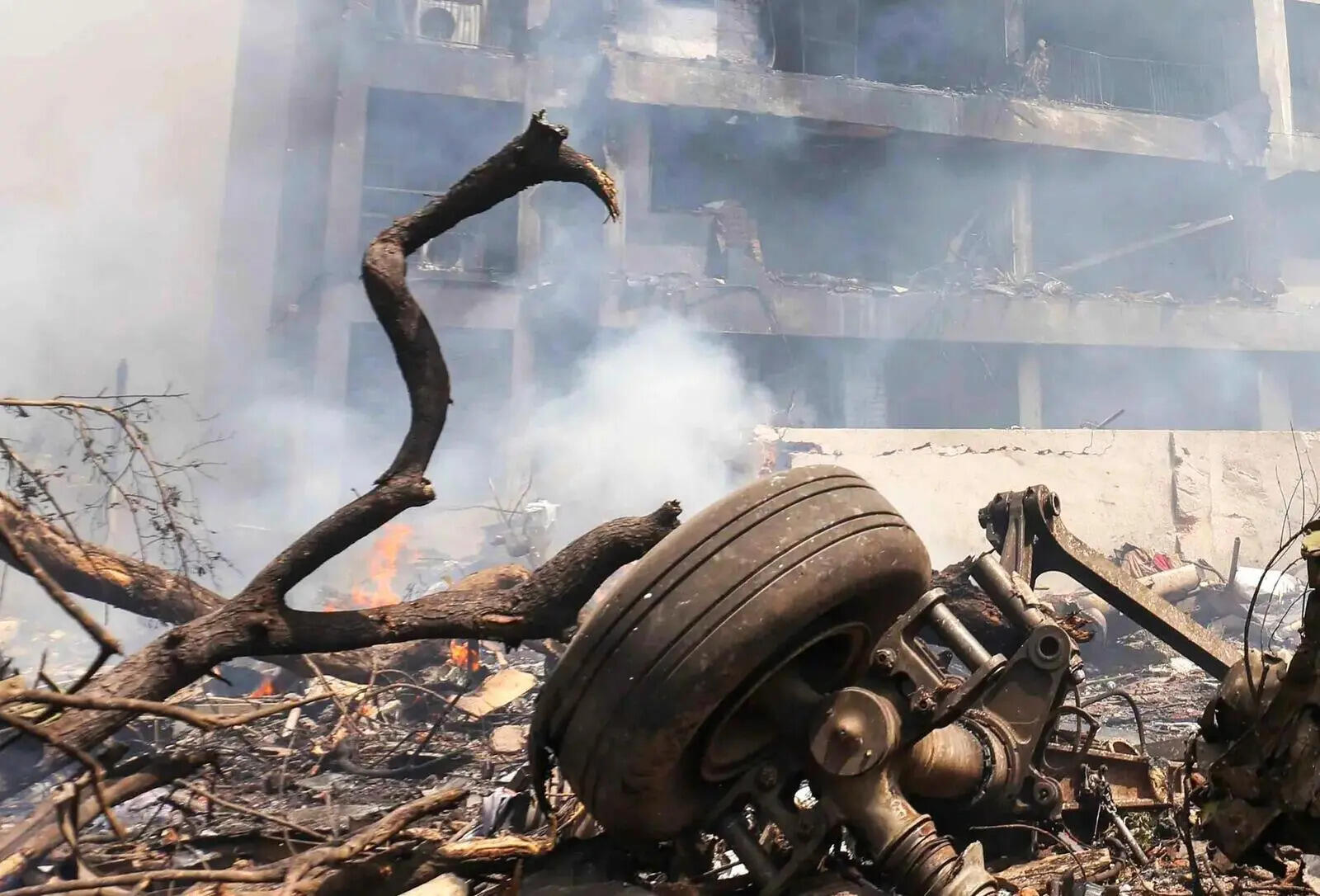
AAIB timeline raises questions
According to data recovered from the aircraft’s Enhanced Airborne Flight Recorder (EAFR), the sequence of events unfolded rapidly after take-off:
- 1:38:33 pm: Aircraft crossed take-off decision speed at 153 knots
- 1:38:35 pm: Aircraft achieved rotation speed (Vr) at 155 knots
- 1:38:39 pm: Air/ground sensors switched to “air mode,” confirming lift-off
- 1:38:42 pm: Aircraft reached maximum recorded airspeed of 180 knots
- Immediately after, both Engine 1 and Engine 2 fuel cutoff switches moved from RUN to CUTOFF within about one second of each other
- 1:38:47 pm: Ram Air Turbine (RAT) hydraulic pump began supplying hydraulic power as engine speeds dropped below minimum idle
- 1:38:52 pm: Engine 1 fuel switch returned to RUN
- 1:38:56 pm: Engine 2 fuel switch returned to RUN
- 1:39:05 pm: Mayday call transmitted
- 1:39:11 pm: Flight recorder stopped recording
At first glance, the sequence appeared straightforward, the engines lost fuel supply first, followed by RAT deployment as a consequence of power failure.
Pilots’ body flags ‘technical discrepancy’
However, the Federation of Indian Pilots (FIP) has questioned this sequence in two letters sent to the AAIB on March 12. The pilots’ body cited technical documents from Hamilton Sundstrand, now Collins Aerospace, the manufacturer of the Boeing 787 RAT system which reportedly state that RAT deployment is triggered 10 to 15 seconds after a complete electrical power loss.The AAIB timeline, however, shows the RAT hydraulic system becoming active only around four seconds after the fuel switches moved to CUTOFF.According to the FIP, this discrepancy could indicate that an electrical failure may have occurred before the fuel switches changed position.The pilots’ body argued that if the RAT system requires at least 10 seconds to deploy after a power failure, the four-second gap recorded in the AAIB report appears inconsistent with the manufacturer’s design logic.
CCTV footage raises fresh questions
In a second letter, the FIP pointed to CCTV footage from Ahmedabad airport that allegedly shows a dark object appearing beneath the aircraft while it was still rolling on the runway.According to the pilots’ body, the sequence of images could indicate the RAT door opening or the RAT deploying before the aircraft became airborne.“The sequence from Frame 1 to Frame 4 appears consistent with RAT door opening and/or RAT deployment while the aircraft is rolling on the runway,” the letter reportedly stated.The FIP urged the AAIB to correlate the CCTV footage with black box data and conduct simulator reconstructions under two scenarios:
- an electrical failure triggering automatic RAT deployment
- deliberate manual movement of the fuel switches by pilots
“The purpose of the above exercise is to ascertain whether the root cause relates to a technical failure or to deliberate pilot action,” the FIP said.Also see: Ahmedabad plane crash: Flight that never reached its destination; pics of fallen crew
What the AAIB report say and doesn’t say
The AAIB preliminary report, released under International Civil Aviation Organization (ICAO) rules is meant to present technical facts without assigning blame. However, some details in the report fuelled speculation around deliberate pilot action, TOI earlier reported.The report noted that the co-pilot was the “Pilot Flying” while the captain was the “Pilot Monitoring.” It also documented the cockpit exchange about the fuel cutoff switches but did not provide any interpretation or analysis of the conversation.The report further mentioned a 2018 advisory issued by the US Federal Aviation Administration regarding possible disengagement of the fuel control switch locking feature on Boeing aircraft.According to the AAIB, Air India had not carried out the suggested inspections because the advisory was not mandatory. The report also noted that the aircraft’s throttle control module had been replaced in 2019 and again in 2023.Experts say the locking feature exists specifically to prevent accidental movement of fuel control switches. If compromised, the switches could theoretically move without deliberate pilot action.
‘Captain was trying to save the aircraft’
Meanwhile, the Daily Mail report has added another dimension to the debate. Romin Vohra, who entered the temporary mortuary at Ahmedabad hospital claimed he saw Captain Sabharwal’s body still clutching the aircraft’s control yoke.The account has been cited by some aviation experts as possible evidence that Captain Sabharwal was attempting to control the aircraft until the very end.Captain CS Randhawa, president of the Federation of Indian Pilots, said that if the account is accurate, it would suggest the pilot was “doing exactly what a captain is trained to do in an emergency.”“Any responsible captain would take over the aircraft and try until the very last second to get the nose up,” Randhawa said, the news outlet reported. Investigators are expected to release the final report into the Air India AI-171 crash next month on June 12.