

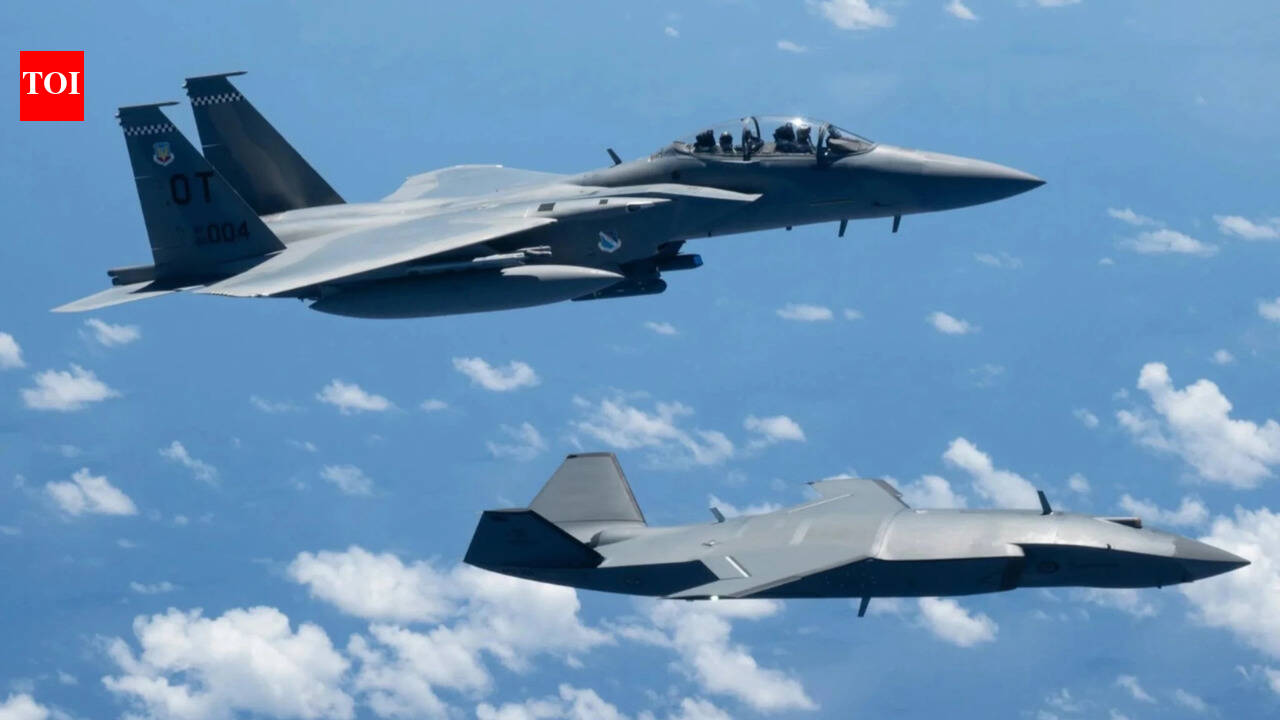
As the world of aerial combat is moving towards the integration of Collaborative Combat Aircraft (CCA), or unmanned loyal wingmen in combat fleets, the US Air Force has taken the lead in the deployment of this new entrant. The CCA is a key element in the evolution of how technology is reshaping aerial combat. CCAs are a key initiative under Washington DC’s sixth-generation Next Generation Air Dominance (NGAD) programme. This initiative is designed to integrate autonomous unmanned aircraft with fifth and sixth-generation fighters.CCAs are planned to be cost-effective, highly autonomous platforms equipped with mission-customisable sensors, weapons and AI-driven software. They can operate as teammates, independent platforms, or swarms, enhancing situational awareness, lethality and survivability for the manned fighter. These systems are expected to conduct missions such as strike, surveillance, electronic warfare and early warning. By deploying large numbers of CCAs, the USAF aims to counter hostile stealth fighters and maintain air superiority. The programme represents a system-of-systems approach that combines fighters, weapons, sensors and integration with battle management set-ups to deliver dynamic, flexible airpower for contested environments.CCAs are now undergoing their first major real-world test over the vastness of the Pacific Ocean during Operation Valiant Shield. The US Air Force has released images of the MQ-28 Ghost Bat loyal wingman with an F-15 EX fighter aircraft. Interestingly, the USAF has recently ordered two separate close combat aircraft; these are Anduril’s FQ-44A Fury and General Atomics’ FQ-42A Dark Merlin. Both these unmanned aircraft are yet to be delivered. The MQ-28, on the other hand, is developed by Boeing Australia for the Royal Australian Air Force. The Block-2 variant of the Ghost Bat is currently under production, while a newer variant of the aircraft, the Block-3 is now under development, expanding the envelope for the aircraft.The Ghost Bat and the F-15 flew together during a large-scale exercise called Valiant Shield. This exercise saw the participation of US forces as well as forces from Australia, Japan, Canada and New Zealand. with operations taking place in the Northern Mariana Islands, Guam, Japan, and at sea around the Mariana Islands Range Complex. The exercise took place in the western Pacific.India too is developing a family of unmanned effectors under the Combat Air Teaming System (CATS) programme. Under this programme work is currently underway on an unmanned loyal wingman called CATS Warrior. This aircraft is expected to fly alongside the Tejas, the underdevelopment fifth-generation Advanced Medium Combat Aircraft (AMCA), the Sukhoi-30 MKI and the Jaguar fighter. This programme is being developed by Hindustan Aeronautics Limited’s Aircraft Research & Development Centre with a private partner. China too is working on a similar programme.