

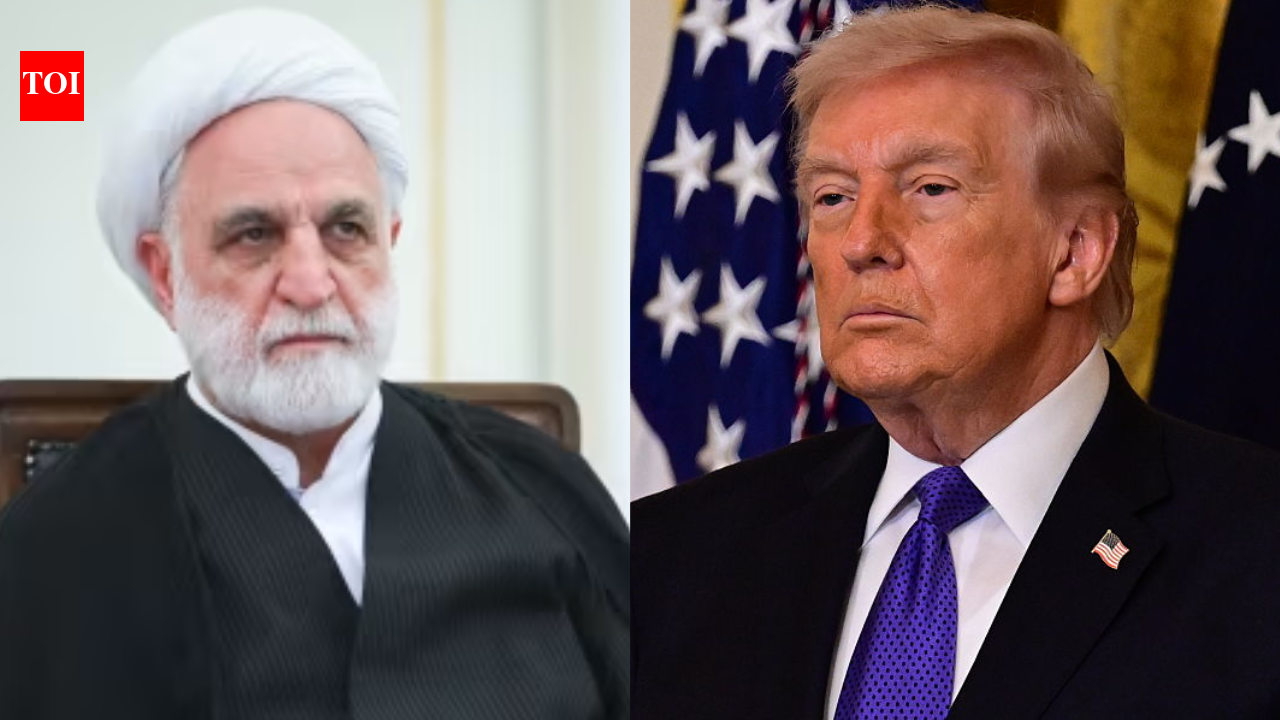
On the 46th anniversary of one of the most humiliating defeats in US military history, Iran’s judiciary chief Gholam-Hossein Mohseni-Eje’i on Saturday warned the United States that incidents similar to “Isfahan and Tabas” could be repeated if tensions escalate in the Persian Gulf.“Americans should know that they also lack the capability to impose a naval blockade on Iran; Isfahan and Tabas will be repeated once again in the waters of the Persian Gulf,” he said in a post on X. Referring to historical incidents, he highlighted the symbolic importance of Tabas. “On the fifth of Ordibehesht, the anniversary of the humiliating defeat of the American military in Tabas, today holds a different colour and scent for the people of Islamic Iran,” the post added.He also pointed to recent confrontations, claiming Iranian forces had inflicted setbacks on US-linked forces.“The commando forces of the wretched enemy, in the recent war, were this time grounded in Isfahan and suffered a heavy, instructive defeat at the hands of the armed forces of the Islamic Republic of Iran,” his post further read.The remarks come amid escalating tensions between Tehran and Washington over maritime operations in the Strait of Hormuz, where both sides have accused each other of aggressive actions, including naval interceptions and vessel seizures.
What was Operation Eagle Claw ?
The reference to Tabas relates to Operation Eagle Claw, a failed US military mission carried out in April 1980 during the presidency of Jimmy Carter.The operation was launched during the Iran hostage crisis, after Iranian students stormed the US Embassy in Tehran in November 1979 and took dozens of Americans hostage.After months of failed negotiations, Carter approved a complex rescue plan involving multiple branches of the US military. The mission was designed as a multi-phase operation over two nights, involving Air Force C-130 transport aircraft and Navy RH-53D helicopters.On the first night, transport aircraft carrying Delta Force commandos were to land at a remote desert site known as Desert One, about 200 miles southeast of Tehran, and rendezvous with helicopters launched from the USS Nimitz. After refuelling, the troops would be moved closer to Tehran and go into hiding before launching an assault on the embassy the following night.The plan included storming the embassy, rescuing the hostages, and evacuating them through a secured airfield with the support of additional US forces.However, the mission began to unravel early. The helicopters encountered a severe dust storm, or haboob, which caused visibility issues and mechanical failures. Some helicopters were forced to turn back, while others arrived late or became unfit for the mission.With too few operational helicopters remaining, the mission was aborted.During the withdrawal, a RH-53D helicopter collided with a C-130 aircraft carrying fuel, triggering an explosion that destroyed both aircraft and killed eight US servicemen — five Air Force personnel and three Marines.The failed operation drew global attention and exposed major weaknesses in US military coordination, later leading to significant reforms in special operations forces.