

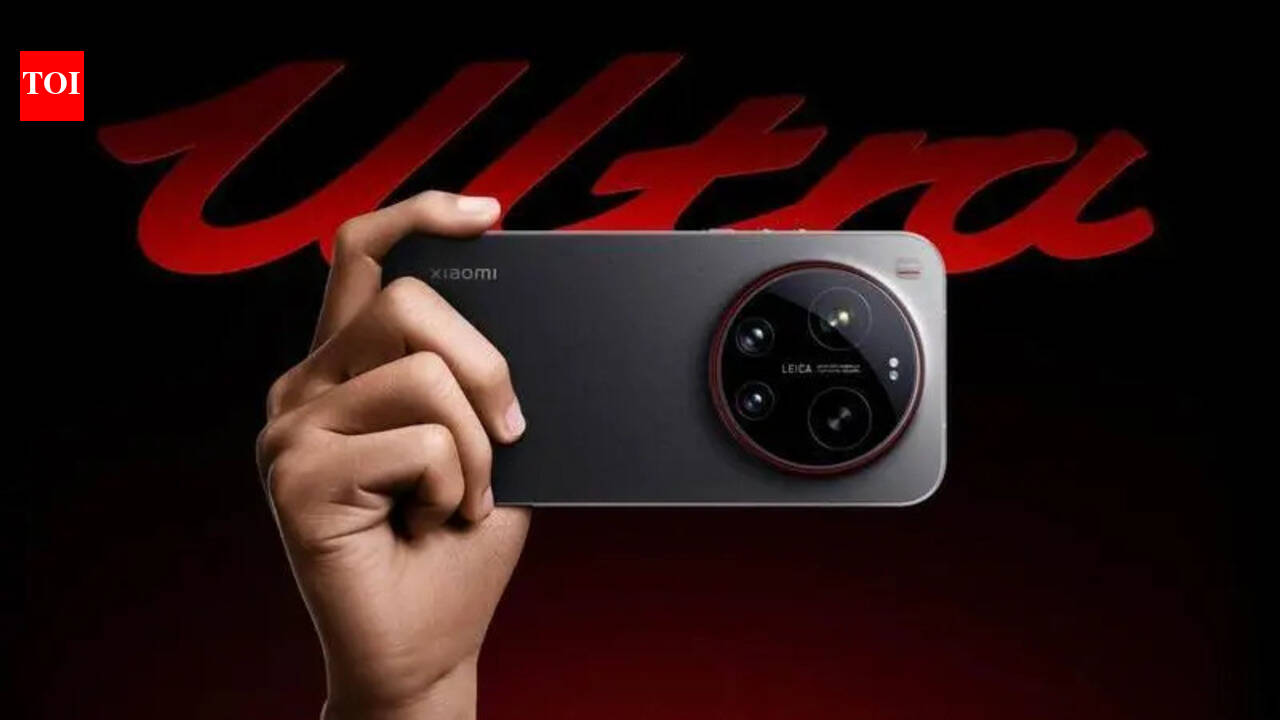
The language around smartphone cameras has been one of ebb and flow — from the wonder of mobile phones that could take photos to jaws hitting the floor at just how capable these cameras had become, to resigned indifference that pretty much every smartphone camera now is good enough — a steady march of bigger sensors, higher megapixel counts, longer zoom ranges and smarter processing, each generation promising to close the gap with dedicated cameras without ever quite getting there.But over the past two years, something changed. Nothing encapsulates that as well as the latest flagship from the house of Xiaomi. the 17 Ultra. More than any other device, the 17 Ultra embodies this age-old question: are we still carrying phones with cameras, or have we begun carrying cameras that happen to make phone calls.For Gautam Batra, associate director of product marketing at Xiaomi India, the journey to this point has been a long and deliberate one, stretching back across multiple generations of Ultra devices, each iteration pushing the boundaries of what a smartphone camera could do, from the early adoption of large, near one-inch sensors to the refinement of multi-camera systems that worked in coherence rather than isolation, and eventually to the inclusion of dual telephoto lenses and extreme resolution zoom, but even that relentless progression, he suggests, eventually ran into a wall, not of capability but of direction. “We were already at a point where we felt we had built the best camera phone in the market,” he says, reflecting on Xiaomi’s 2025 flagship, the 15 Ultra. “The question then becomes, what next? Do you just keep making the sensor bigger? Do you keep adding more hardware? At some point, you start losing what makes it a phone.”That moment of introspection appears to have been the catalyst for what Xiaomi now calls LOFIC, a new imaging approach co-engineered with Leica, a partnership that has steadily deepened from colour tuning and lens profiling into a far more fundamental collaboration around imaging science itself. Traditionally, improving smartphone imaging has meant choosing between physically larger sensors and optics, which inevitably demand compromises in thickness, battery capacity and overall ergonomics, or leaning into multi-frame processing and AI-driven enhancements, which can produce technically impressive results but often at the cost of natural rendering, introducing motion artefacts, ghosting, or an overly processed, almost synthetic look. Sandeep Sarma, associate director for marketing and PR at Xiaomi India, frames the problem in more grounded, user-centric terms. “Even if you make the sensor bigger, there are still challenges that don’t go away, like motion blur or ghosting when you’re shooting moving subjects, or scenes with extreme highlights and shadows,” he explains. “The other option is to rely heavily on AI and stacking, but that can dilute the art of photography. We didn’t want to go down that route.”LOFIC, then, is Xiaomi’s attempt to resolve those tensions without defaulting to either extreme, working within the same one-inch-class sensor footprint while fundamentally rethinking how light is captured and processed, to reduce reliance on multi-frame stacking, minimising motion artefacts and preserve dynamic range in a way that feels closer to a traditional camera than a computational construct, a direction shaped as much by Leica’s decades of optical expertise and colour science as by Xiaomi’s own strengths in sensor integration and computational pipelines. “What we have done is essentially find a third, non-existent option,” Sarma says. “You keep the hardware within the constraints of a smartphone, but you unlock a level of performance that allows you to avoid those compromises, so you get better dynamic range, less motion blur, and more natural images without needing aggressive processing.”If that sounds like a familiar promise, the difference, Xiaomi insists, lies in how deeply the approach is integrated into the imaging pipeline, and in the nature of its collaboration with Leica, which both Sarma and Batra are keen to emphasise is not a superficial branding exercise but a genuine co-engineering effort that extends from lens design principles and optical calibration to colour rendering philosophies rooted in Leica’s heritage. The two companies have established a joint optical institute, and according to Batra, decisions are made with equal input from both sides, with neither able to push through a compromise unilaterally. “Nothing ships unless both Xiaomi and Leica are happy with the result,” he says. “We can’t say we’ve locked the hardware and you have to live with it, and they can’t just put their name on something they don’t believe in. That’s why we say co-engineered, because it genuinely is.” He adds that Leica’s contribution goes beyond optics into the “right tonality” and emotional rendering associated with cinema and classic photography, something Xiaomi actively sought to bring into a smartphone context.That dynamic, he argues, is what allows the 17 Ultra to move beyond the incremental improvements that have defined the category for years and instead attempt something more fundamental, a shift in how smartphone cameras behave and, crucially, how their output feels. One of the persistent criticisms of modern smartphone photography has been the so-called “camera phone look”, images that are technically sharp and well exposed but carry the tell-tale signs of heavy processing, from flattened highlights to overly clean shadows and an almost hyperreal texture that can feel detached from the scene itself. Xiaomi’s goal with the 17 Ultra, shaped in part by Leica’s long-standing emphasis on capturing light and emotion faithfully, is to move away from that aesthetic and towards something closer to what users would expect from a dedicated camera. “We wanted to deliver an experience that feels like a camera, not like a camera phone,” Sarma says.Batra reaches for a broader metaphor to describe where Xiaomi believes the 17 Ultra sits within the wider imaging landscape, comparing the current generation of smartphone cameras to objects operating within the Earth’s atmosphere, each at a different altitude but ultimately bound by the same constraints, while dedicated DSLR and cinema systems exist beyond that layer, in orbit. “The idea is not that we are replacing those systems,” he clarifies. “But the 17 Ultra starts to break through that ceiling and move in that direction. It’s about taking a step closer to that space.”That ambition is perhaps best understood not through specifications but through behaviour, specifically, how the device changes the way users approach photography in their daily lives. For Sarma, the shift is deeply personal, rooted in his own experience as a photography enthusiast. “Ten years ago, if I wanted to get the kind of shots I was happy with, I would carry two DSLRs, six lenses and a tripod,” he recalls. “Today, all of that is condensed into one smartphone. I don’t need a separate camera anymore. This is the best camera I have with me.”Batra, who describes himself as less of a technical photographer and more of an everyday user, frames it through the lens of memory and documentation. “Earlier, the camera was just a feature for me,” he says. “But now, when I look at photos of my daughter or my dog, I realise how important it is that those moments are captured well. You start valuing the camera differently, because those are memories you can’t recreate.“In that sense, the Xiaomi 17 Ultra is not simply about competing with other flagship smartphones or even narrowing the gap with dedicated cameras, but about redefining what users expect from the device they carry every day, shifting the conversation from specifications to intent, from capability to experience. It reflects a broader evolution within Xiaomi itself, from a company once defined by aggressive pricing and strong hardware to one that is increasingly positioning itself as a driver of innovation, particularly in imaging, where it now seeks not just to participate in the conversation but to lead it, alongside partners like Leica that bring a century of photographic philosophy into the equation.The result is a device that resists easy categorisation, no longer fitting neatly into the label of a “camera phone” because that label itself feels insufficient for what it is trying to achieve. Instead, the 17 Ultra represents a more subtle but significant transition, one where the camera is no longer a component of the phone but its defining centre, around which everything else is built. And in that shift lies the clearest indication yet that the industry may be approaching a tipping point, where the distinction between smartphones and cameras is no longer one of capability, but of form factor alone.