

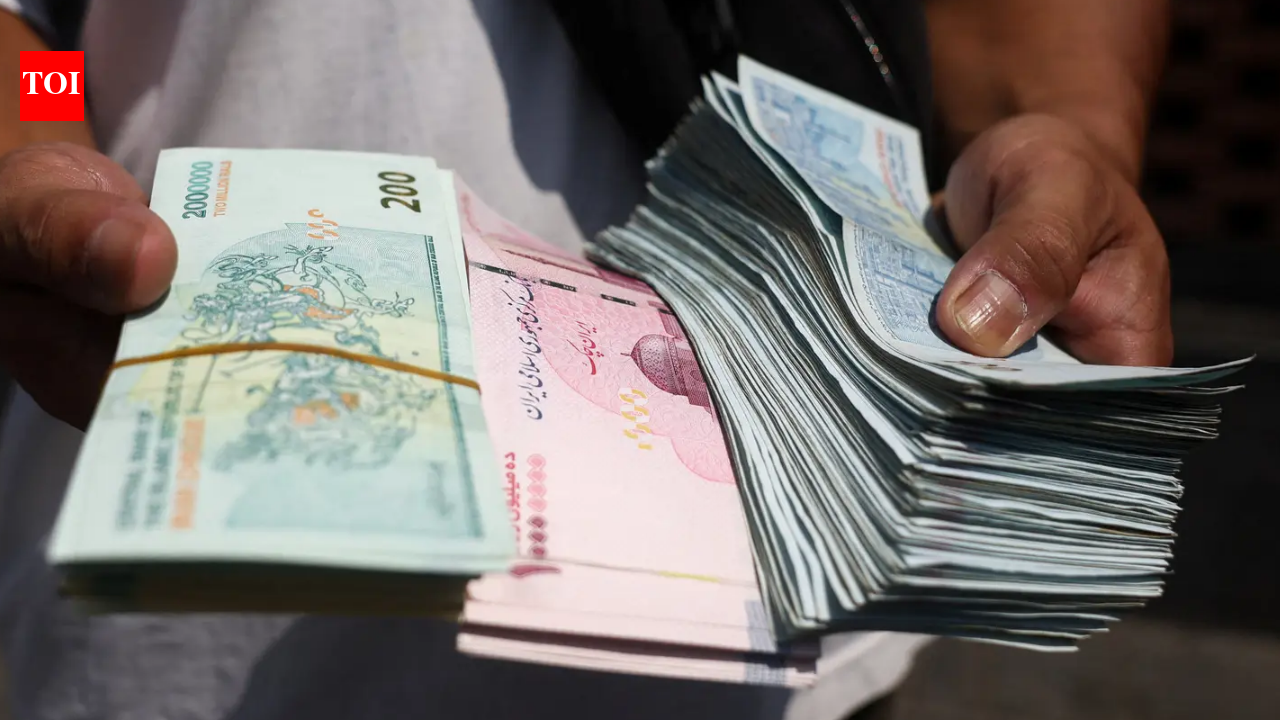
Iran’s rial hit rock bottom on Monday, falling to a record low as Washington prepared what it called an “economic D-Day”. The fresh sanctions are set to pile more pressure on an economy already battered by existing restrictions and a US naval blockade.The rial fell to 2.02 million against the US dollar when informal currency markets opened. While Iran’s official Central Bank rate was around 1.5 million rial to the dollar, the informal market rate is the one most Iranians pay.The currency was already in trouble before the US and Israel attacked Iran on February 28, with the economy facing double-digit inflation and negative growth. Nearly six months of war have since pushed the rial to fresh record lows.But the currency’s slide has not translated into the concessions US President Donald Trump has been seeking from Tehran. Iran continues to maintain a firm grip over shipping through the Strait of Hormuz, a crucial waterway through which a fifth of the world’s traded oil moved freely before the war.Iranian attacks and threats during the conflict have severely hampered traffic through the strait.
Iran, Oman work on Hormuz plan
As tensions over the waterway continue, Iran and Oman are reportedly close to agreeing on a plan for jointly managing the Strait of Hormuz.Regional officials said the proposed arrangement would allow ships to enter the Persian Gulf through an Iranian-controlled route and leave through a route controlled by Oman, which lies on the opposite side of the strait.The development comes amid increasingly sharp criticism of Oman from Trump. The US president has threatened to bomb the American ally if it “gets in the way.”Oman’s foreign minister was scheduled to travel to Iran on Tuesday for another round of talks.
US works on tougher sanctions
Washington, meanwhile, is looking to raise the economic pressure further. US Treasury Secretary Scott Bessent said on Monday that the administration would announce sanctions stronger than those already imposed, including secondary sanctions against countries that continue to do business with Iran.“President Trump decimated Iran’s economy to a point where the rial has never been weaker and inflation has rarely been higher,” Bessent wrote in an opinion piece in the Financial Times on Sunday. “The regime’s final refuge now lies in the self-deception of fearful nations that still believe accommodating aggression can secure a durable peace.”The pressure has already begun to affect Iran’s trading relationships. The United Arab Emirates announced last week that it was suspending all trade with Iran, a day after Trump spoke to UAE leader Sheikh Mohammed bin Zayed Al Nahyan.The UAE has long been one of Iran’s biggest trading partners and its largest source of imports. It has also been an important re-export and financial hub for Iranian businesses.Iran has warned countries against backing the new US measures. Mohsen Rezaei, the hard-line leader of Iran’s Supreme National Security Council, said in a post on X that support by any country for the new American economic measures would be regarded as an “act of war.”