

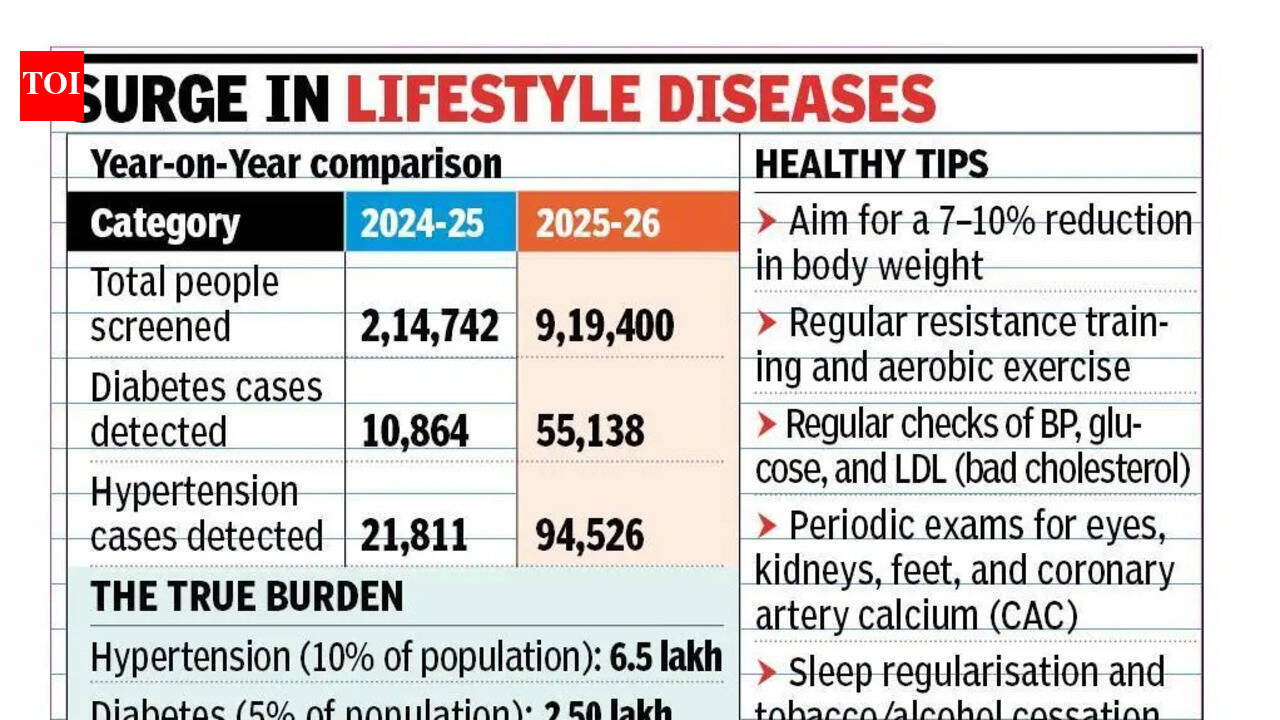
Pune: The city has recorded a sharp rise in detected cases of diabetes and hypertension, a surge health officials attribute to a massive expansion in screening coverage by the PMC. By integrating civic-run outdoor patient department (OPD) clinics, Aarogyavardhini centres, maternity homes and hospitals into the diagnostic network, the city has significantly widened its net to identify patients previously living with undetected conditions.Dr Vaishali Jadhav, assistant health officer, Pune Municipal Corporation (PMC) and head of the non-communicable diseases (NCD) programme, said the jump in numbers is a direct result of expansion of screening sites. “In 2024-25, our data was limited to our 19 maternity centres and three hospitals. For 2025-26, we expanded this to include 54 OPDs and 80 Aarogyavardhini centres,” she said.Dr Jadhav added that the digital integration has streamlined the process. “Each patient is now enrolled using their ABHA (Ayushman Bharat Health Account) card, leading to a drastic rise in recorded screenings. We don’t just stop at detection; we follow up on treatment and provide necessary medications,” she added.The latest PMC health report highlights the staggering shift in data. Total screenings rose from 2,14,742 in 2024-25 to 9,19,400 in 2025-26. Diabetes diagnoses increased from 10,864 to 55,138 cases. Hypertension diagnoses jumped from 21,811 to 94,526 cases.Current PMC estimates suggest that approximately 10% of city residents (roughly 6.5 lakh people) suffer from hypertension, while 5% (over 2.5 lakh people) are living with diabetes.Experts said these numbers reflect the “true burden” of disease caused by modern urban living. Dr. Dattatraya B. Patil, consultant, internal medicine, Noble Hospitals and Research Centre, said, “The rise of lifestyle disorders in Maharashtra is driven by rapid urbanisation, sedentary habits, and poor dietary choices. Desk-bound work and high-calorie processed foods have spiked obesity and stress levels. Environmental factors like air pollution and substance use, including tobacco and alcohol, further exacerbate these risks, which often go undetected due to low health literacy.”To combat this growing crisis, medical professionals are calling for a shift towards preventive and aggressive management. Dr Rashida Melinkeri, consultant physician and lipidologist at KEM Hospital, emphasised that a holistic approach is essential.“Once diagnosed, we must set strict targets for blood pressure, glucose, and LDL (bad cholesterol) levels to ensure adherence,” Dr Melinkeri said. She recommended a 7–10% weight loss, regular resistance or aerobic training, and sleep regularisation. “To limit systemic damage, patients must also undergo regular screenings for the eyes, kidneys, and feet, along with coronary artery calcium (CAC) tests to monitor heart health.”While the high numbers present a daunting public health challenge, city officials view the data as a milestone in progress. By finding and enrolling thousands of previously ‘invisible’ patients into the healthcare system, the city aims to curb future complications and reduce mortality rates through early intervention.