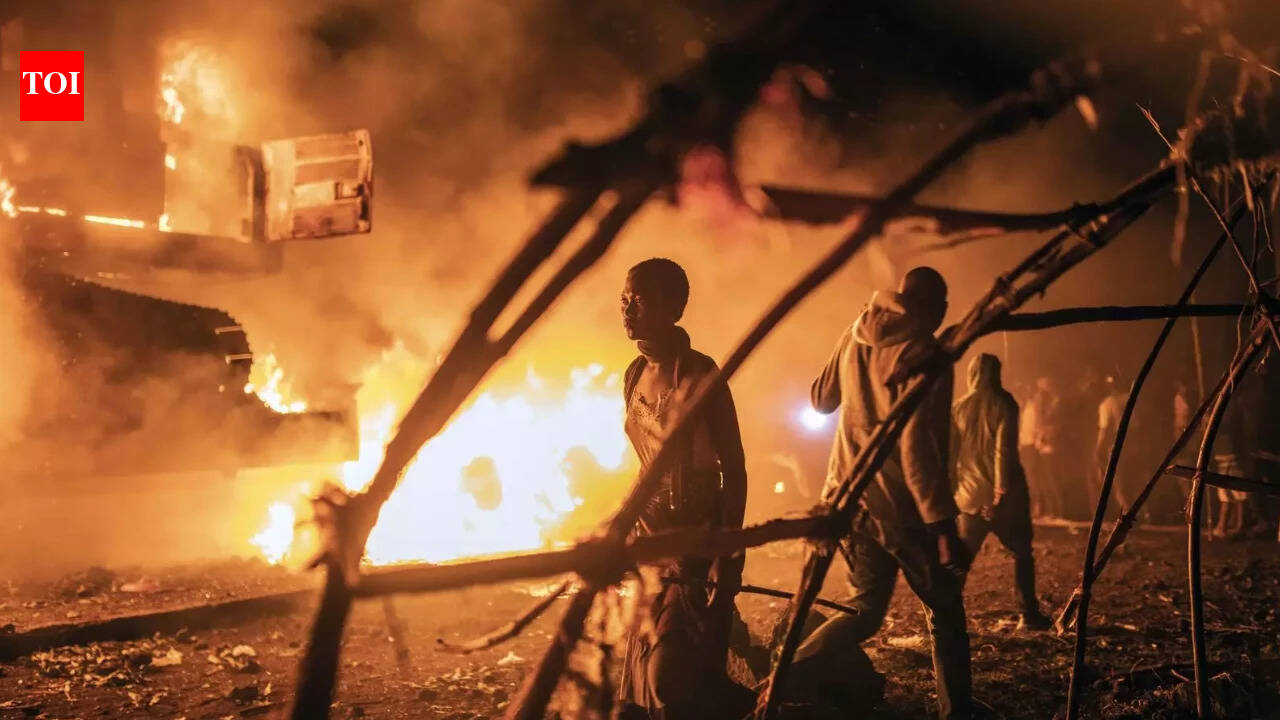

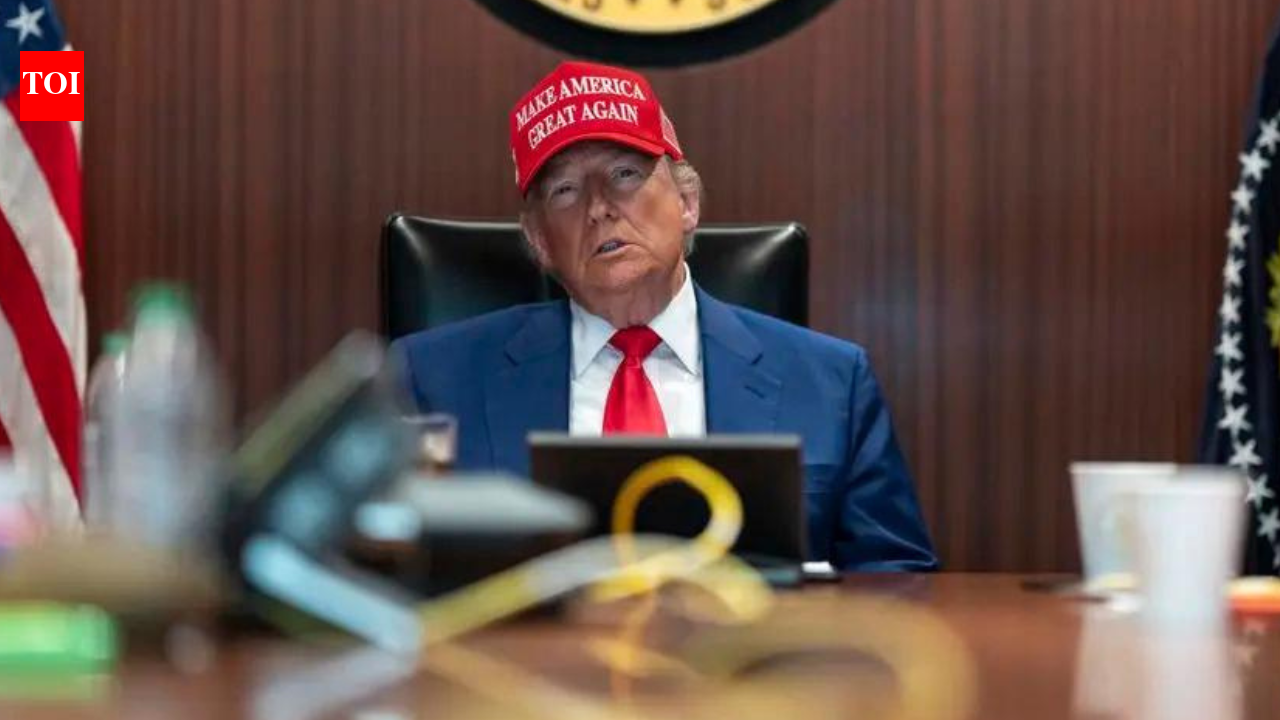
TOI correspondent from Washington: US President Donald Trump continued his blow hot-blow cold approach towards Iran as both sides exchanged fire in the Strait of Hormuz on Thursday amid a diplomatic impasse. While the global community appeared to be coming to a realization that Washington may have overestimated its hand in the conflict, signs of Iranian resilience and defiance prompted Trump to issue what was seen as another veiled nuclear threat against a country he has repeatedly threatened to eviscerate. While insisting that the ceasefire with Iran is still in effect despite escalating hostilities in the Gulf, Trump told reporters, “If there’s no ceasefire, you’re not going to have to know. You’re just going to have to look at one big glow coming out of Iran.” The “one big glow” remark sounded close to a nuclear threat, and he followed it with another ultimatum: “They better sign the agreement fast … If they don’t sign, they’re going to have a lot of pain.”The comments came after renewed missile exchanges, drone attacks and naval skirmishes in and around the Gulf on Thursday, even as Washington insists negotiations with Tehran are still alive. Administration officials later attempted to soften the nuclear threat interpretation, arguing the president was referring broadly to US military power. Trump’s threats also landed awkwardly alongside fresh intelligence leaks suggesting the US may not hold as commanding a hand as the White House projects publicly. A classified CIA assessment circulated among senior policymakers reportedly concludes that Iran can withstand the US-led naval blockade around the Strait of Hormuz for at least three to four months — and possibly longer — despite heavy bombardment and severe economic pressure. The intelligence reportedly estimates Iran still retains roughly 70 per cent of its missile-launch capability and has resumed portions of its missile production network even though Trump has boasted of having eviscerated them, leaving Iran with less than 20 per cent capacity. Iran’s foreign minister Abbas Aragchi appeared to taunt and troll Trump on the issue, claiming Teheran’s missile inventory and launch capacity is at 120 per cent, well above US assessments. “Every time a diplomatic solution is on the table, the US opts for a reckless military adventure. Is it a crude pressure tactic? Or the result of a spoiler once again duping POTUS into another quagmire?” Araghchi said in a post on X as reports in US media began questioning Trump’s assertions about Iran folding. The intelligence findings undercut repeated White House claims that Tehran is on the verge of military and economic collapse. Instead, intelligence officials reportedly warned that Iran appears prepared for a long war of attrition, banking on Washington’s limited political patience and growing strains on US military inventories.Those concerns were amplified by another report reverberating through strategic circles in Washington. Under the striking headline “China Sees a ‘Giant With a Limp’ as US Drains Weapons on Iran War,” analysts close to Beijing argued that America’s prolonged Iran campaign is steadily weakening its deterrence posture in the Pacific, especially over Taiwan.Chinese analysts reportedly believe the Iran conflict is exposing vulnerabilities in US logistics, missile stockpiles and political endurance — an assessment likely to sharpen Beijing’s leverage in future negotiations with Washington. Trump is scheduled to visit Beijing later this month, and for now, the image emerging from both reports is of a superpower trying to sound like a colossus while quietly confronting the arithmetic of overstretch.That contradiction was visible again Thursday as Trump simultaneously boasted that Iran had been “blown away in two minutes” after fresh clashes in the Gulf, while also insisting negotiations were “going very well.” The US President has also become a constant butt of jokes on late night television tapping into growing public disquiet over yet another distant war. The latest military exchanges began late Wednesday when Iranian drones and anti-ship missiles reportedly targeted US naval assets escorting commercial shipping near Hormuz. Pentagon officials said American destroyers intercepted multiple projectiles, though regional reports suggested at least one vessel sustained minor damage. Iran meanwhile accused Washington of violating the ceasefire framework through continued maritime interdictions and air surveillance operations near Iranian territory.Inside Washington, the conflict is also exposing fractures within Trump’s own coalition. Some Republican hawks are pressing for broader strikes on Iranian infrastructure and Revolutionary Guard leadership targets, arguing Tehran is showing resilience precisely because Washington has not escalated hard enough. But another faction — including several military officials and conservative foreign-policy skeptics — fears the administration is drifting into an open-ended regional war with unclear objectives, mounting costs and shrinking strategic returns.