
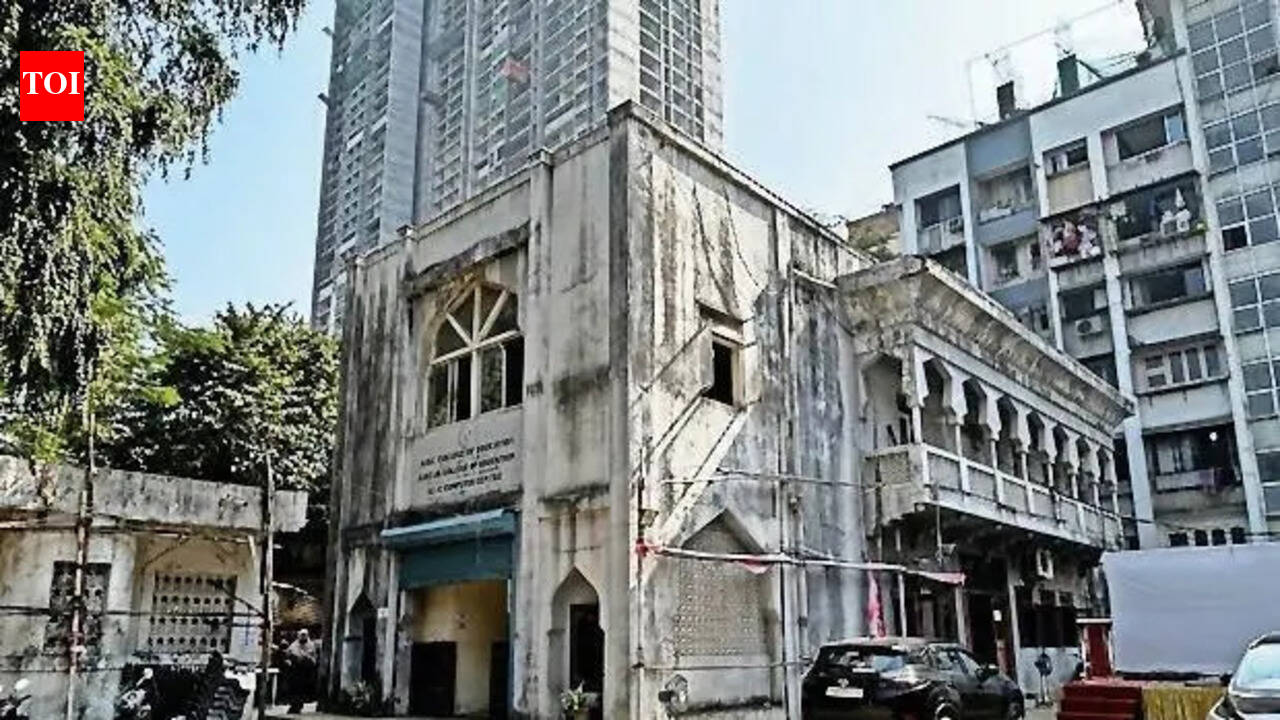
In Sept 1927, Khwaja Abdul Hamied (1898-1972), returning from Germany with a doctorate in chemistry, reached Bombay from Columbo. Completely broke, he went to the Khilafat House to see Maulana Shaukat Ali who gave him Rs 50 for the train journey to Aligarh. Hamied went on to found Cipla, the pharma company he and later his son, Yusuf Hamied, turned into a global pharma giant.This is one of several stories the Khilafat House located at the leafy Love Lane, also called Moti Shah Road in Byculla, carries. Headquarters of the Khilafat movement (1919-1924) which Ali brothers Maulana Mohammed Ali and Maulana Shaukat Ali launched and Mahatma Gandhi led, Khilafat House remained a hub of nationalist leaders during the movement. Though the movement fizzled out after Mustafa Kemal Ataturk abolished the Ottoman Caliphate, it helped galvanize support for the non-cooperation movement.The building housing the All India Khilafat Committee’s offices, B.Ed, D.Ed colleges, computer course, library and a hall will in a couple of years turn into a ground plus-14 storey modern skyscraper housing, besides Khilafat offices and its colleges, a 125-bed hospital, a BSc nursing institute and a state-of-the art conference hall. “The property will eternally belong to the Khilafat Committee trust and the hospital and nursing college will earn the trust a handsome revenue to fund our educational and charitable activities,” says trustee Rauf Pathan.Businessmen brothers Umar Sobani and Usman Sobani gifted their bungalow and its premises to the All India Khilafat Committee in 1924 through a registered lease. The Sobani brothers had bought this plot in1897 from the British E D Sasoon Company for Rs 50,000 on a lease of 99 years and built a bungalow on it with an open space on the premises.The Khilafat Committee which held its initial meetings at Chotani House of industrialist Seth Mian Mohammed Chotani in Masjid Bundar requested the Sobani brothers for the space. Subsequently, the committee moved to the bungalow in Byculla which became Khilafat House. “To avoid future claims on the Khilafat House’s ownership, the Sobani brothers handed it over to the Khilafat Committee through a registered lease for 99 years which ended in 1997. After 25 years, we got the lease renewed with the collector in 2022,” says Sarfraz Arzoo, Trust’s chairman. Among notable leaders Khilafat movement attracted was Barrister M Y Nurie (1895-1971), a freedom fighter who opposed M A Jinnah’s two-nation theory so severely that, according to Gandhian-political leader Homi J Taleyarkhan, Jinnah called Nurie “my fiercest competitor.” Nurie, who became minister in the first government of the Bombay province formed after the 1937 elections, alleges his grandson-Mahim resident Owais Nurie, was sidelined by Indira Gandhi because he joined the syndicate that opposed her. But that is another story.Indira Gandhi surfaces in Khilafat House story again as former minister-scholar Rafiq Zakaria, as Khilafat Committee’s chairman, invited her to inaugurate the renovated Khilafat House in 1981. Few in the city know better than script writer-playwright Javed Siddiqui what Khilafat House looked like before its 1981 renovation: “It was a beautiful bungalow made of small bricks and wood with a verandah and courtyard. Zahid Shaukat Ali, son of Maulana Shaukat Ali, ran the Urdu daily khilafat from here while writers and poets, including Khwaja Abdul Hamied, Shamim Jaipuri, Rajinder Singh Bedi, Majrooh Sultanpuri, would come. It was a hub of the intelligentsia.”says Siddiqui.