
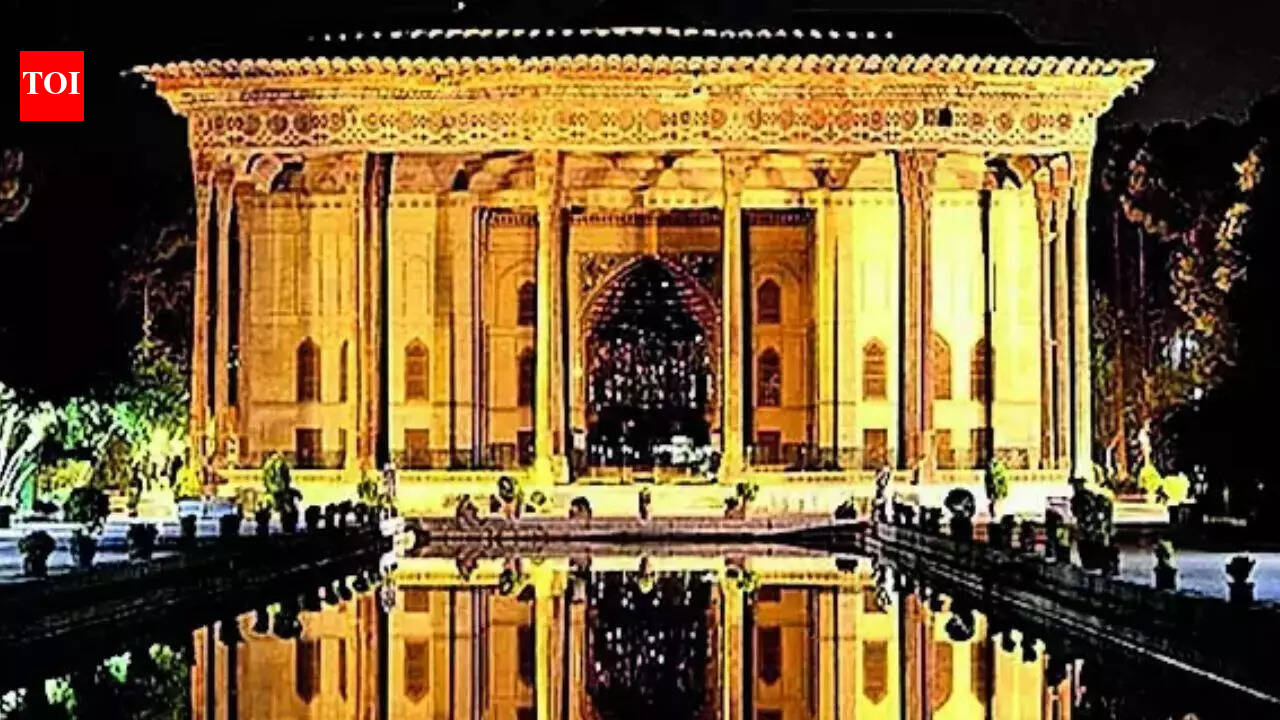
MUMBAI: They survived invasions, coups, World War II and the eight-year war with Iraq. Now many of Iran’s iconic heritage sites — including the Unesco-listed Golestan Palace, Naqsh-e Jahan Square and Chehel Sotoun Palace — have suffered damage following US-Israel airstrikes. Iran has said it installed blue flags on all heritage and cultural sites as a signal to Israel and the US, in vain.Historians, Zoroastrian researchers and heritage enthusiasts have expressed outrage at the damage to these World Heritage sites, saying they “belong not just to Iran, but to humanity”. Many of the monuments — including museums and mosques — may not have been directly hit. However, they sustained damage from shockwaves and falling debris caused by strikes on nearby govt buildings and military and police infrastructure.Among the sites are Ali Qapu Palace, Golestan Palace and Falak-ol-Aflak Castle. The castle, built atop an ancient hill during the pre-Islamic Persian Empire of the Sasanian era, stands in Khorramabad in Lorestan Province. “Fifty-six museums, historical monuments and cultural sites have so far sustained damage,” said Hamid Sharifi, public diplomacy officer at the Consulate General of Iran in Mumbai.Historians say the damage to heritage sites in Isfahan is particularly heartbreaking. Landmarks such as Naqsh-e Jahan Square — a 16th-century plaza spanning 964,000 square feet — and the gardens and pavilion of Chehel Sotoun Palace are so magnificent that they helped earn Isfahan the title Nisf-e-Jahan, or “half the world”, among Iranians. “I have been to Iran many times and am devastated at the reported damage to these historic sites,” said Firoza Mistree. “As a Zoroastrian, I consider Iran my homeland, though I live in and love India. The sites associated with the pre-Islamic Persian Empire were well maintained, and Iranians are proud of their heritage. I am heartbroken.”The reported damage to Chehel Sotoun Palace is no less painful for historians. In Persian, chehel means 40 and sotoun means column. The palace’s twenty wooden columns are reflected in the garden’s long pool, creating the illusion of forty — a feature that gives the monument its name.Historians say the destruction of such sites erases shared cultural memory. “All heritage sites are universal and carry the cultural memory of human civilisation,” said historian Rana Safvi.In a social media post, Mehdi Jamalinejad said, “In the 21st century, with the most advanced weapons, they target the oldest symbols of civilisation.”